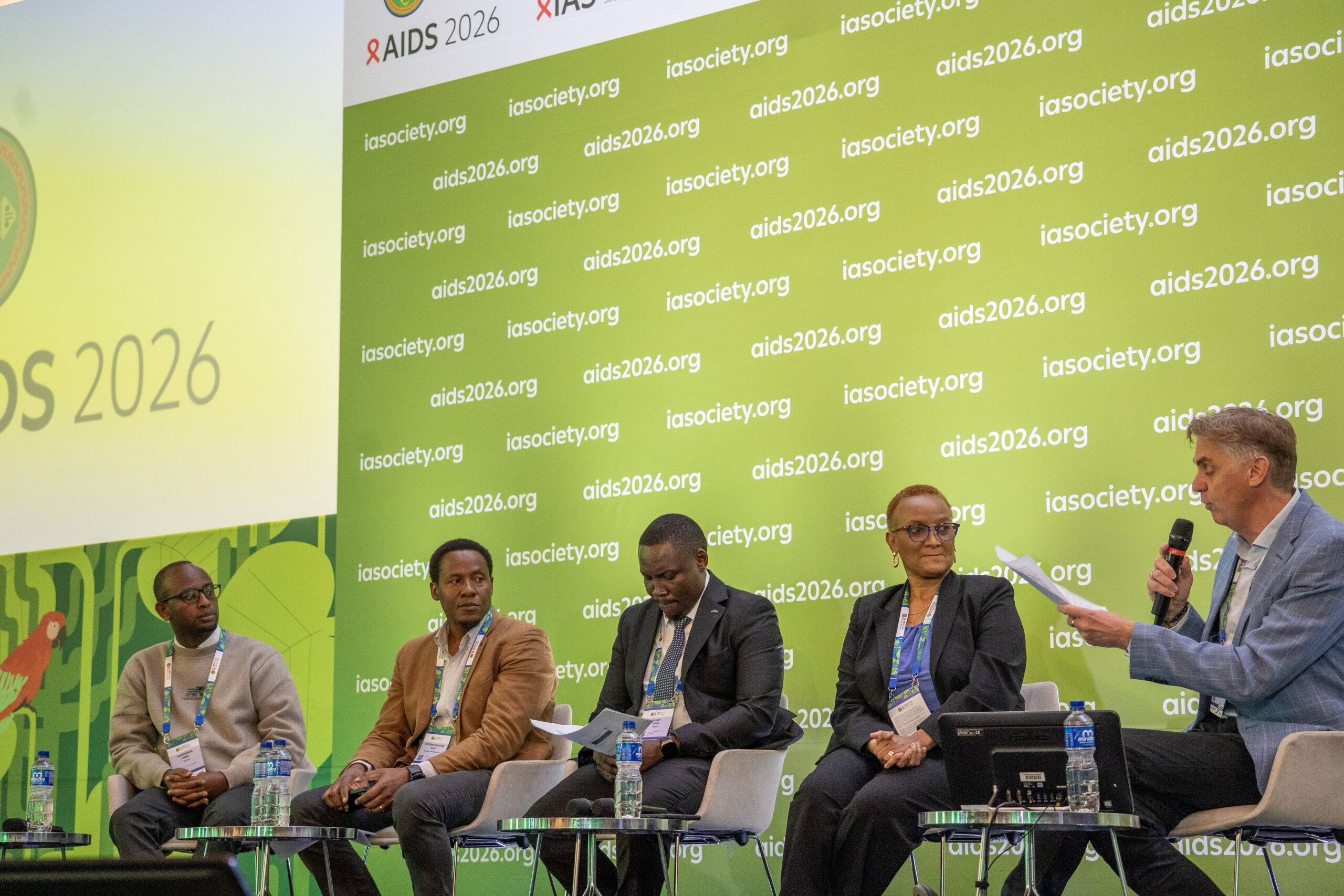
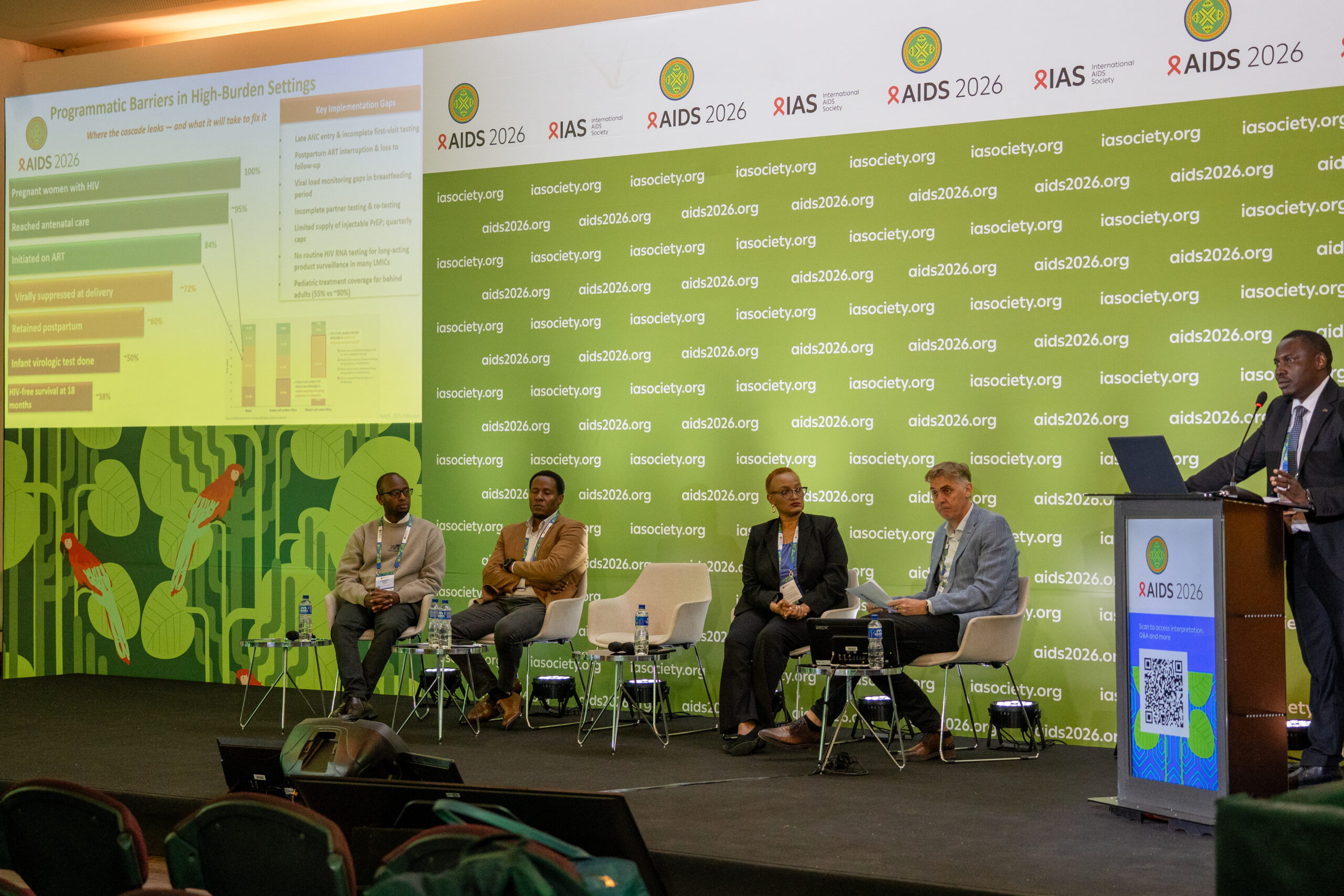
At the 18th International Workshop on Pediatrics & HIV and AIDS 2026 in Rio de Janeiro, researchers presented new findings spanning epidemiology, prevention of vertical transmission, pediatric treatment, drug resistance, long-acting prevention and treatment, and adolescent care.
Across the findings, a common picture emerged: the science and tools for preventing and treating HIV among women, children, and adolescents continue to improve, but gaps in service delivery are preventing those advances from reaching everyone who could benefit. At the same time, funding instability threatens to widen existing gaps.
Our team reviewed the research.
Five Things That Stood Out
1. Progress is slowing and the remaining gaps require more tailored responses
The decline to approximately 93,000 new HIV infections among children in 2025 represents a major achievement. Yet reaching that milestone took considerably longer than earlier stages of progress.
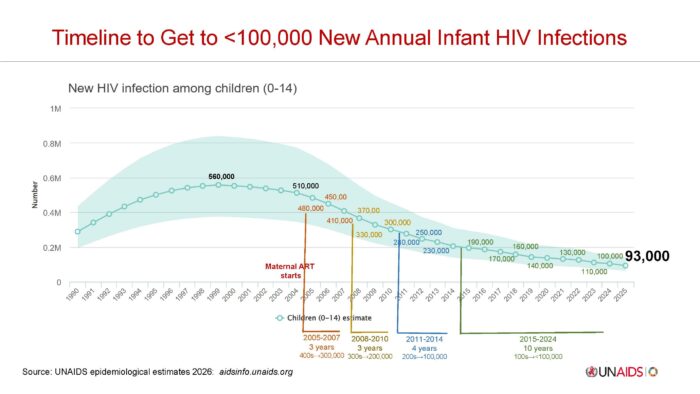
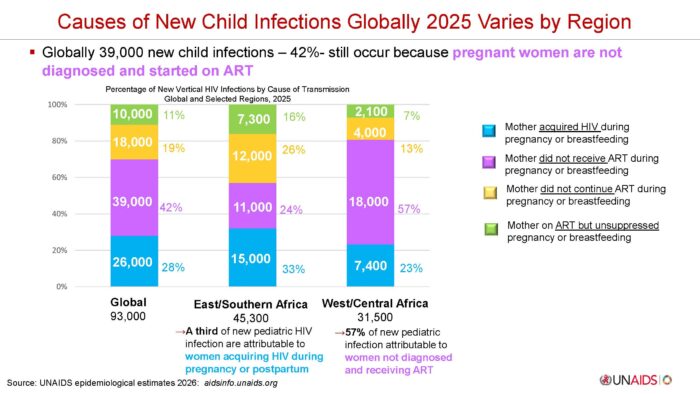
The remaining burden is highly concentrated. Eastern and Southern Africa accounted for 49% of new pediatric HIV infections in 2025, while Western and Central Africa accounted for another 34%. Together, the two regions accounted for 83% of new pediatric infections globally.
But the drivers of those infections differ substantially by region. In Eastern and Southern Africa, where maternal ART coverage is high, remaining pediatric infections are more often associated with HIV acquisition during pregnancy or breastfeeding, treatment interruption, or lack of viral suppression. In Western and Central Africa, where maternal ART coverage is lower, women not receiving ART during pregnancy or breastfeeding account for a much larger share of new pediatric infections.
What this means in practice
Accelerating progress will require responses tailored to the gaps driving pediatric infections in different settings. That may mean strengthening earlier diagnosis and ART initiation in some settings, while in others placing greater emphasis on identifying women who acquire HIV during pregnancy or breastfeeding, maintaining women on treatment, and ensuring viral suppression throughout pregnancy and the breastfeeding period. There is no one-size-fits-all solution; the most effective approach will depend on the specific gaps and circumstances in each community.
2. The pediatric treatment gap demands renewed attention, particularly beyond early childhood
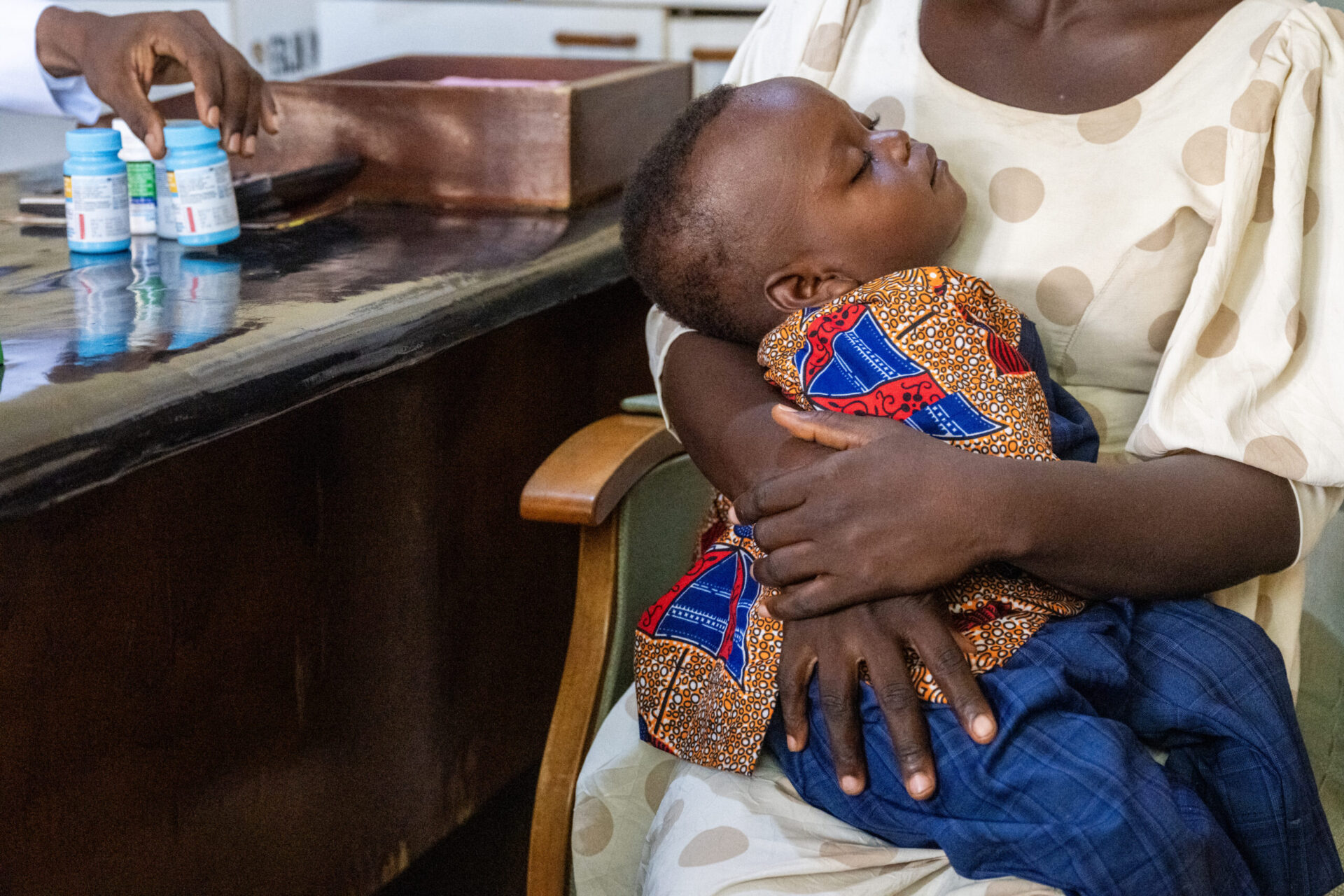
While adult ART coverage has continued to increase, pediatric coverage has not kept pace. In 2025, approximately 55% of children ages 0–14 living with HIV were receiving ART, compared with 79% of adults. And that gap appears to be widening.
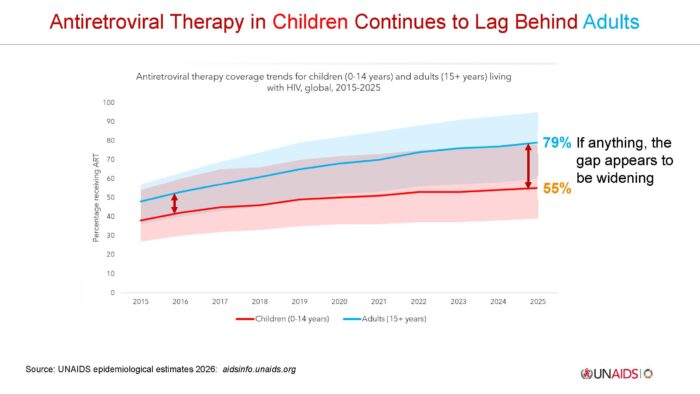
Of the estimated 570,000 children living with HIV who were not receiving ART in 2025, 80% were older than age five, underscoring the need to strengthen case finding, linkage, and retention beyond early childhood.
The changing funding environment makes this especially urgent. An analysis of PEPFAR program data found 77,163 fewer children receiving PEPFAR-supported ART in FY2025 than in FY2024, a 14.2% decline. In countries experiencing declines, pediatric reductions outpaced those among adults; in South Africa and India, declines exceeded 40%. The investigators cautioned that these findings are a signal rather than a definitive conclusion, but they raise significant questions about program stability.
Modeling presented at the Pediatric HIV Workshop underscores the potential stakes. If intervention coverage were reduced by 50% by 2030, models project 3 million pediatric HIV infections and 1.1 million deaths by 2040, primarily in sub-Saharan Africa.
What this means in practice
Pediatric treatment trends should be monitored separately from adult trends rather than assuming children will benefit equally from broader ART programs. Particular attention should be paid to finding and retaining older children and adolescents who may be missed by approaches focused primarily on younger children. Programs should also scrutinize site-level enrollment and retention data for early signs that children are disproportionately affected by service disruptions or funding changes. Because pediatric HIV programs depend on functioning health systems, reliable supply chains, and sustained investment, declines in pediatric treatment may also provide an early warning, a canary-in-the-coal-mine, of broader program disruption.
3. Closing the PMTCT gaps requires reaching women beyond facility visits
Several studies presented in Rio showed how gaps can emerge even where PMTCT services are well established. An audit of 365 infants who acquired HIV in Uganda found that nearly half of their mothers were first diagnosed with HIV during breastfeeding. Only about half of the infants had documented postnatal ARV prophylaxis. Maternal viral load and partner testing were also significant gaps.
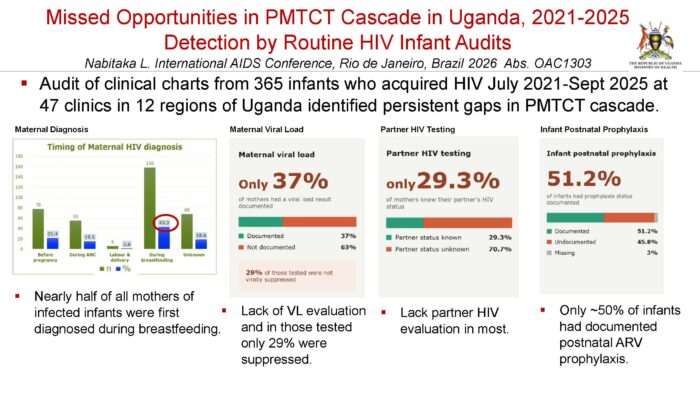
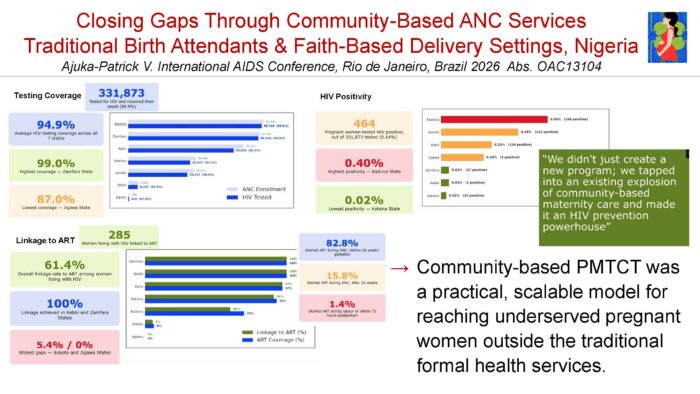
Examples of solutions to these challenges provided cause for optimism. Studies in Nigeria and India demonstrated how community-based and decentralized approaches—including working through traditional birth attendants, faith-based facilities, lower-level health facilities, and community health workers—can bring HIV testing and linkage closer to pregnant women who may not be reached through traditional facility-based services.
Postpartum monitoring remains another important vulnerability. Data from the Western Cape showed increased viral load testing during pregnancy following updated guidelines and the rollout of dolutegravir, driven largely by increased testing at delivery. But postpartum monitoring did not show the same improvement.
What this means in practice
The PMTCT cascade cannot effectively end at delivery. Programs should examine whether testing, prophylaxis, viral load monitoring, and retention systems adequately cover pregnancy and the full breastfeeding period, while considering community-based and differentiated models for populations poorly reached through facility-based services.
4. Better pediatric HIV treatment still depends on finding treatment failure early
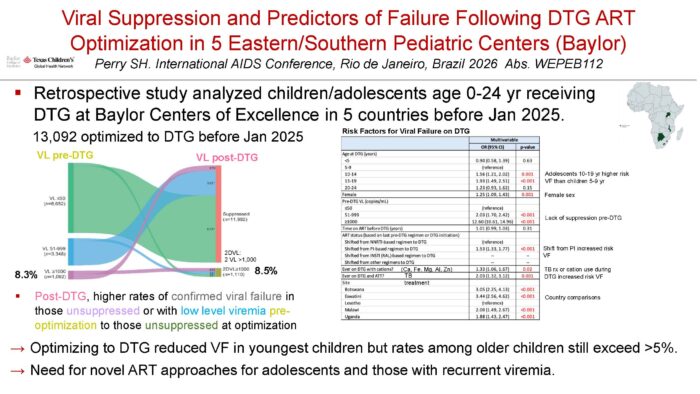
Dolutegravir (DTG)-based ART has significantly improved treatment options for children living with HIV. Evidence presented in Rio supports its effectiveness. But even highly effective treatment does not eliminate treatment failure. This underscores the importance of identifying and responding quickly when viral load remains high.
Among children and young people with confirmed viral failure while receiving DTG, researchers found evidence of drug resistance in many of those tested. This included resistance to the class of drugs that includes DTG.
Other findings were reassuring. In the PENTA-21 study, children who were already virally suppressed and switched to dolutegravir/lamivudine (DTG/3TC) maintained high levels of viral suppression, including those with evidence of previous drug resistance.
What this means in practice
DTG-based treatment remains highly effective, but programs cannot assume that an effective regimen alone eliminates treatment failure. Regular viral load monitoring, prompt follow-up when viral load remains high, and adherence and differentiated care support remain essential.
5. How services are delivered to adolescents may be as important as what is delivered
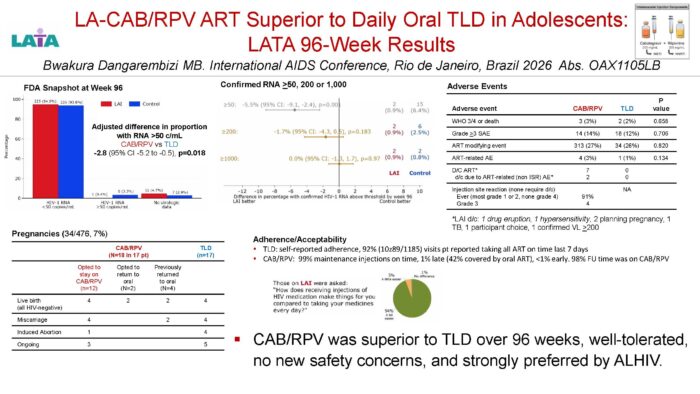
Some of the most promising findings presented in Rio involved long-acting prevention and treatment. In the LATA trial, adolescents living with HIV who were virally suppressed were randomized to receive either long-acting injectable cabotegravir/rilpivirine or daily oral tenofovir/lamivudine/dolutegravir (TLD). At 96 weeks, confirmed viral rebound was less common among adolescents receiving the long-acting regimen than among those receiving daily oral TLD. The injectable regimen was also well tolerated and strongly preferred by participants, with 99% of maintenance injections given on time.
Evidence on long-acting PrEP also reinforces an important implementation lesson: biomedical innovation alone is not enough. Among adolescent girls, young women, and female sex workers using long-acting cabotegravir for PrEP in Zambia, community-based delivery was associated with a substantially lower risk of discontinuation than facility-based delivery. The investigators concluded that delivery model, not simply dosing frequency, was a major determinant of persistence.
What this means in practice
New long-acting technologies could substantially expand the options available to adolescents and young people, but their impact will depend on delivery models that reflect how young people actually engage with services. Community delivery and differentiated care should be prioritized alongside biomedical innovation. Adequate resources will also be essential to translate these innovations into effective, sustainable programs.
Taking this knowledge forward
The science presented in Rio shows us that the next phase of the pediatric and maternal HIV response will require programs to focus more deliberately on the populations and moments where current systems are losing people: from early access to antenatal care, where community-based models remain essential to reach women who would otherwise miss testing altogether, through maternal diagnosis during breastfeeding and postpartum viral load monitoring to case finding among older children and retention of adolescents in treatment and prevention services. At the same time, funding instability threatens to widen precisely the pediatric treatment gaps the global HIV response has spent decades trying to close.
But we know progress, even during the most challenging times, is possible.
The global HIV response has already driven dramatic reductions in new pediatric infections by translating effective interventions into programs that reach women and children. We know what sustained commitment can achieve. The challenge now is to bring that same urgency and resolve to the gaps that remain, tailoring programs to reach those being missed, protecting hard-won gains, and accelerating progress toward a generation in which no child acquires HIV.
This review was conducted by Dr. Lynne Mofenson, senior technical advisor, and Dr. Roland van de Ven, senior director, technical excellence, with support from Glassroth Creative Strategies.
More from AIDS 2026
Story
After Rio: Four Opportunities to End Pediatric HIV
Published August 2026
Topics:
General,
Pediatric HIV
Countries:
Global
News
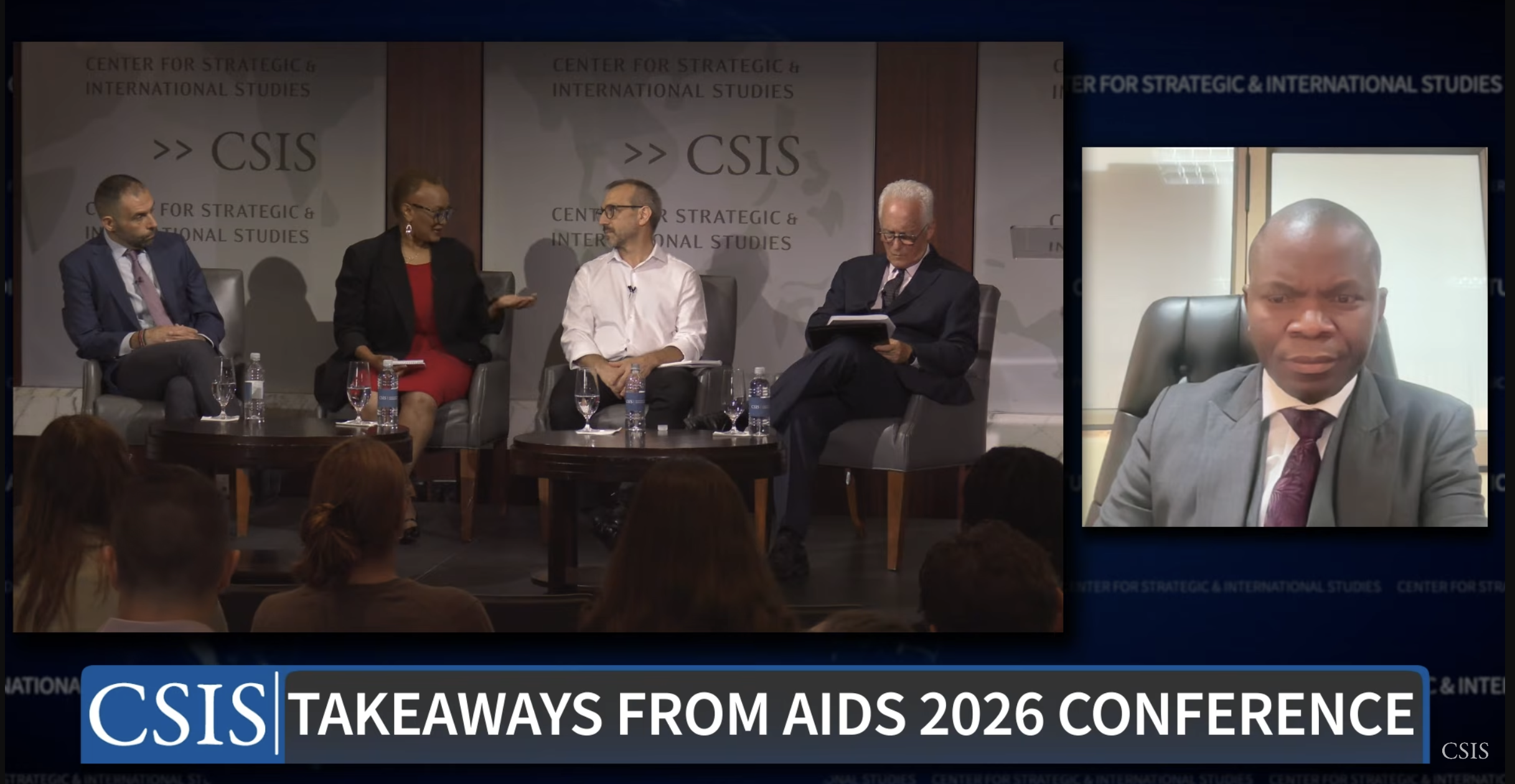
CSIS: Takeaways from the 2026 International AIDS Conference
Published August 2026

Poster
From Mortality Review to Mortality Reduction: The Importance of Embedding Routine Pediatric HIV Death Audits in Tanzania
Published August 2026
Topics:
Pediatric HIV,
Research
Countries:
Tanzania

Poster
Twenty-Four-Month Survival Among Patients with Cryptococcal Antigenemia Enrolled in Malawi’s Advanced HIV Disease Program: A Retrospective Cohort Study
Published August 2026
Topics:
Advanced HIV Disease (AHD)
Countries:
Malawi
Poster
Programmatic Gaps Under Option B+: Factors Associated with Residual Vertical HIV Transmission in Malawi, 2020 – 2024
Published August 2026
Topics:
Prevention of Mother-to-Child Transmission (PMTCT),
Research
Countries:
Malawi