
Zero children living with HIV is the goal. So why aren't we celebrating?
A number in the recently released UNAIDS Global Data Brief made us do a double-take: 94,000 children acquired HIV in 2025.
This is the first time in recorded history, since 1990, that new pediatric infections have fallen below 100,000.
This should mean our efforts are working. PMTCT programs have averted nearly 4.8 million HIV acquisitions in children between 2000 and 2025. Children are being born and remaining HIV-free, and we are getting closer to achieving Generation Zero.
But to end pediatric HIV, we must take a closer look at the data.
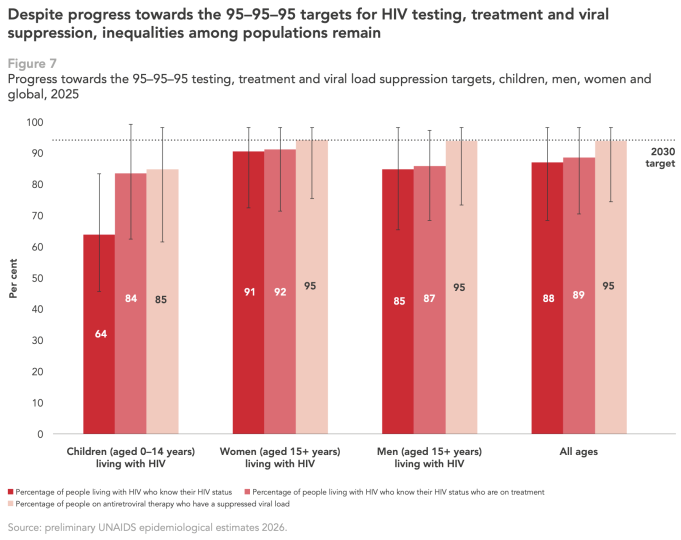
1.4 million children are living with HIV globally, and when we look at the 95-95-95 cascade, children are clearly being left behind. Only 64% of children know their HIV status compared to 91% of women and 88% of men.
This difference isn’t just a gap; it is a chasm of care.
The treatment picture is just as troubling. In 2025, 580,000 children living with HIV were still not on antiretroviral therapy. In 15 years, with significant advances in pediatric diagnosis and treatment, the numbers have improved, but nowhere near what is possible.
Children on treatment continue to struggle to receive optimal care. Only 85% of children who know their HIV status have achieved viral suppression — meaning the virus is reduced to undetectable levels in their blood — compared to 95% of adults. While adults are reaching the third 95 goal, children are once again falling behind.
These inequities mirror what we saw in the recent release of PEPFAR data for the final quarter of fiscal year 2025. In that report, every single indicator in the pediatric HIV cascade showed a decline.
Every child living with HIV deserves to be counted, tested, and treated.
The temptation is to read 94,000 children acquiring HIV in 2025 as a milestone. But we cannot celebrate a number that doesn’t give the full picture.
We are looking forward to the full report from UNAIDS in July, which will provide additional insights. In the coming weeks, our experts will be digging deeper into the data and sharing a wider analysis.

Monthly newsletter
Insights In Your Inbox
Get the latest stories, expert insights, upcoming events, and new resources—delivered straight to your inbox each month.