Authors: Lucky Makonokaya1, Louiser Upile Kalitera1, Shalom Dunga1, Felix Gent1, Francis Chirimba1, Thulani Maphosa1
Affiliations: 1Elizabeth Glaser Pediatric AIDS Foundation, Lilongwe, Malawi
Background
Malawi has made progress toward eliminating vertical HIV transmission under Option B+. However, new pediatric infections still occur.
This study identified factors associated with residual transmission in routine care.
Methods
Case-control study using routine data. Cases were infants born between 2020 and 2024 who tested HIV-positive; two HIV-negative controls per case were matched by birth month and facility.
Analysis: Multivariable logistic regression adjusting for maternal age group, ART duration at delivery, viral suppression status, and infant birth weight.
Results
229 cases and 469 controls.
75% of infections diagnosed at six weeks. Low birth weight higher in cases (18% vs 12%, p=0.017).
Mothers <25 years accounted for 45.9% of cases vs 23.8% of controls. Only 59.2% had viral load results at delivery (n=250).
Infants with HIV infection likely to have mothers not on ART (aOR 28.20, 95% CI 1.79 –442.4) and mothers not virally suppressed at delivery (aOR 15.27 95% CI: 3.1 – 74.8).
No significant differences in suppression rates by infant prophylaxis regimen.
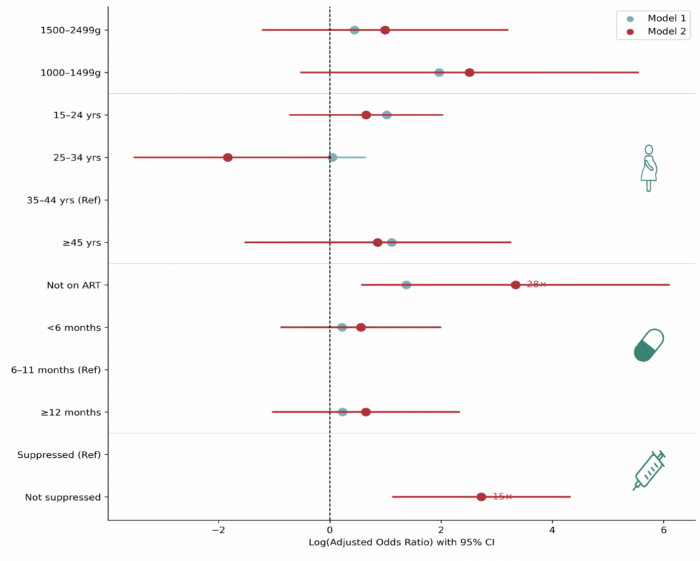
Figure 1: Factors associated with HIV infection among HEI (Model 1 excludes maternal viral load status; Model 2 includes maternal viral load status), logistic regression
Main Findings
Infants with HIV infection were more likely to have mothers not on ART or unsuppressed mothers at delivery. Maternal age <25 years showed increased odds but was not statistically significant after adjustment.
Conclusion
In our study, vertical transmission was strongly associated with lack of ART at delivery and unsuppressed maternal viral load. Maternal viral load coverage was also suboptimal. These findings suggest potential missed opportunities along the eVT care cascade.
Strengthening timely ART initiation, supporting maternal viral suppression during pregnancy, and providing targeted support for young mothers may help reduce new pediatric HIV infections.
Acknowledgements
The work described in this poster was supported by the U.S President’s Emergency Plan for AIDS Relief (PEPFAR) through the Centers for Disease Control and Prevention (CDC) under the Cooperative Agreement NU2GGH002425. Its contents are solely the responsibility of the authors and do not necessarily represent the official views of CDC.