I’m in Malawi to get an on-the-ground view of how HIV programs are faring—particularly those that focus on women and children.
We start the day at the Mchinji District Hospital, with its bustling HIV clinic.
This clinic has been highly successful at eliminating mother-to-child transmission of HIV, both through clinic services and through its coordination with mentor mothers in the surrounding communities. PEPFAR (The U.S. President’s Emergency Plan for AIDS Relief) has been the main engine behind this success.
After a quick tour of the clinic, we head north to visit a volunteer mentor mother.
The sun is rapidly rising over this farming community in western Malawi. After about 18 kilometers, we pull off the tarmac onto a narrow, dusty path near Gwendi. It’s not long before we can go no farther on four wheels, so we park under a jacaranda tree, and step carefully along a windy path into the village.
Before long, we come to a typical homestead: a low house of neatly stacked clay bricks, a swept yard, chickens pecking among the green maize growing along the perimeter.
A Reunion of Smiles
Our host arises from a straw mat where she had been sitting and greets us with a grin.
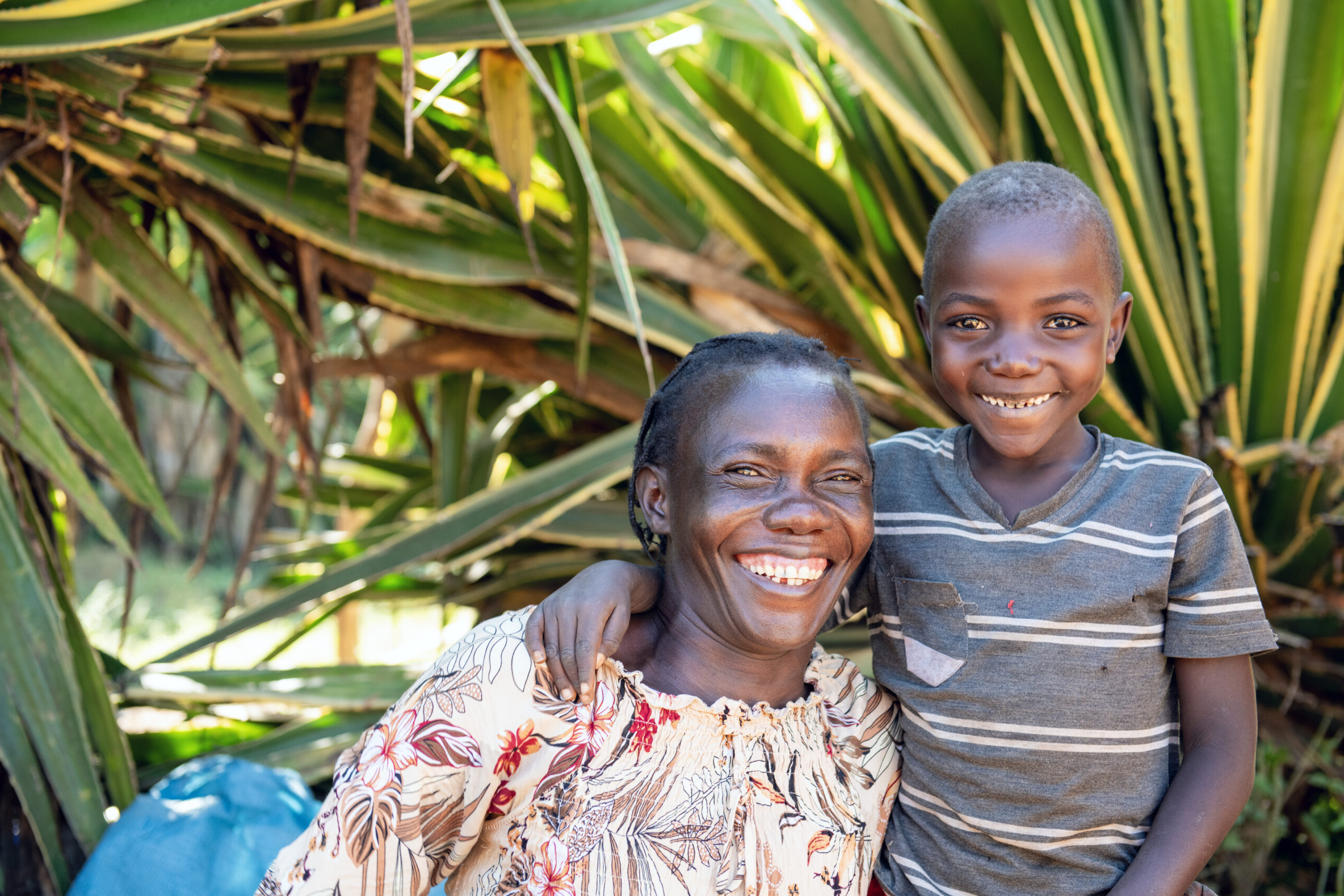
“Don’t you remember me?” she asks. It takes me a few seconds. I look at her. I look around the homestead. I look back at her. Leah! I’ve been here before. Unlike me, Leah looks like she has not aged a day.
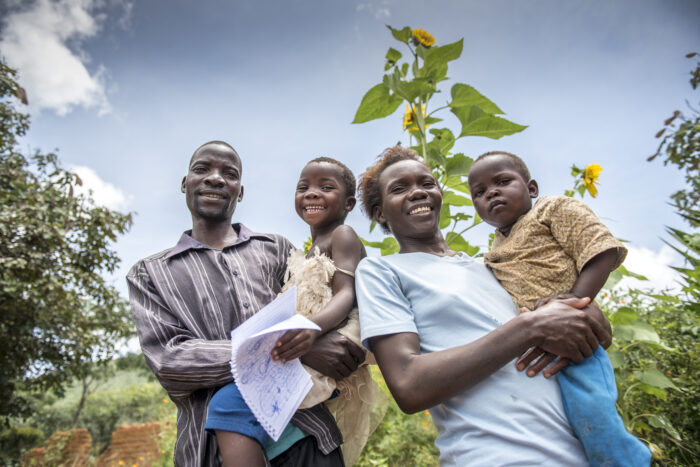
Nine years ago, on a similar visit to Mchinji, I had come to interview Leah, a mentor who was considered a dynamo by hospital staff. On the morning of that visit, Leah explained her experience of learning about her HIV status while she was pregnant and going through prevention of mother-to-child HIV treatment (known as PMTCT) so that her second daughter, Prisca, was born HIV-free. Subsequently, Mercy and Emmanuel were also born HIV-free.
I ask about David and was sad to hear that he had passed away two years ago from cancer. When I met the family years ago, Leah had described David as her rock. Although he was HIV-free, he championed her as a woman living with HIV and as a mentor mother.
“People were trying to discourage my husband so that he should abandon me. But David stood strong and supported me, and we raised up all our HIV-negative kids”—along with oldest son, Victor, who, like Leah, is living with HIV.
Leah tells me that Victor is now 19, healthy and working. Prisca is married with a newborn. (Leah is a proud grandma!) And the other kids are at school for the day.
Saved by a Mentor Mother
Leah reminds me of the time that she was diagnosed with HIV back in 2009. This was three years after PEPFAR came to Malawi to scale up HIV services—particularly PMTCT.
At first, I was so afraid. I couldn’t imagine the future,” says Leah. “I didn’t know how to manage to continue to have children. People in the community advised me that I should prepare to die.”
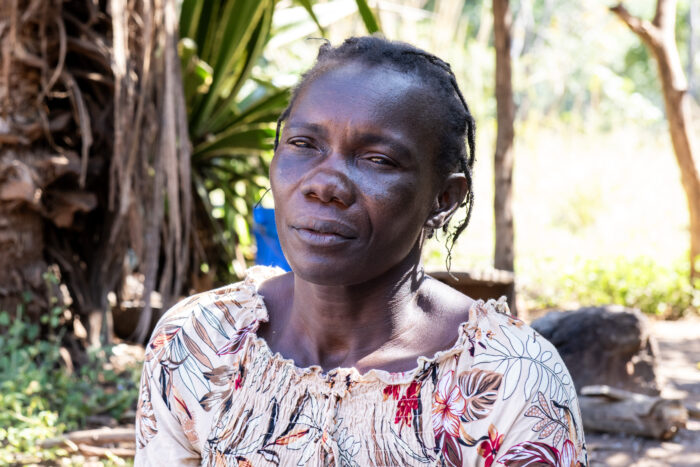
But she did not die. Through the support of a mentor mother, Bella, Leah was assured that she and her baby could be healthy. And they were: “I was a very happy person because I was not expecting that my baby would be free from HIV,” says Leah. “I felt that I should go to talk with all HIV-positive mothers—those who were pregnant as well as breastfeeding mothers.
Paying It Forward
Leah was trained through mothers2mothers, a nongovernmental organization based in South Africa.
“When women in my community with HIV have doubts, I give them strength—not only about PMTCT; I know what it is like to be anxious about how you are going to live with HIV, so I give them full, friendly support so that they should accept the HIV-positive result and live positively.”
Without PEPFAR, I wouldn’t have made it in life,” says Leah, explaining her motivation. “By now, I would have been dead because I didn’t have any idea on how to protect myself or my children from HIV infection.” Instead, all are alive.
And to punctuate Leah’s point, a young boy with a shy smile, sneaks into the yard with a couple of his friends, home from school. This is Lipson, Leah’s youngest son, born five years ago. He crawls into mom’s lap.
“I am proud of my life because I accepted my HIV diagnosis,” says Leah. “And I even disclosed my status to my relatives and neighbors. Everybody knows about my HIV status.”
It was not always easy for Leah. “Despite success [of women delivering HIV-free children], some people in the community did speak bad things to me, to my children. Even my second born daughter, Prisca, when she was getting married, some friends discouraged her fiancé, saying, ‘You are going to get HIV because your mother-in-law is HIV-positive. So maybe your wife was born with HIV.’”
Prisca eventually took an HIV test to prove to the naysayers that she was born HIV-free and remains HIV-free.
An Uncertain Future
Despite these experiences, Leah tells me that knowledge about HIV has increased since the last time I visited Gwendi—and that stigma has reduced. Almost all children in her community are HIV-free—largely because of her efforts.
But Leah worries about the effect of the funding cuts on rural villages like hers. The hospital is a three hour walk away, so trained mentor mothers like her are an important point of contact and source of trusted information here. She does not want to see the clock turn back to a time when it was common for a child to be born with HIV and when people living with HIV felt the need to hide their status.
Leah had been getting a small stipend to supplement her income as a subsistence farmer. But due to funding cuts, mothers2mothers had to close operations in Malawi. Now a widow, with children still in school, Leah has a lot to manage. She feeds her family the best she can with the maize and beans she grows, but she struggles to pay school fees and buy clothing.
And yet, Leah still finds time to mentor other mothers, purely on a volunteer basis.
“Even though my contract ended, I couldn’t stop there. Since I had vast knowledge, I continued working to support my fellow mothers.”
This Is Not Sustainable
As we leave with Leah, to visit a young mother in the community, I am impressed by her commitment to her community. But I also see how she struggles to make ends meet. I cannot see how this is sustainable in the long term.
It is a lot to expect the remaining mentor mothers to fill in the funding gaps on a volunteer basis.
If community health workers are not supported, what happens to this vital link between villages and health centers?
What happens in communities where there is no “Leah”?
About the Author
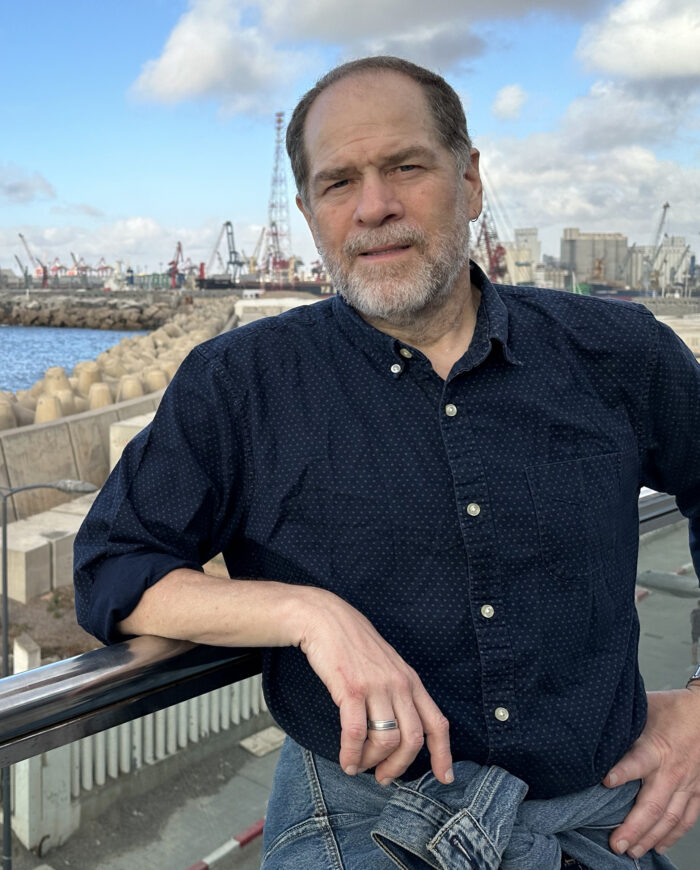
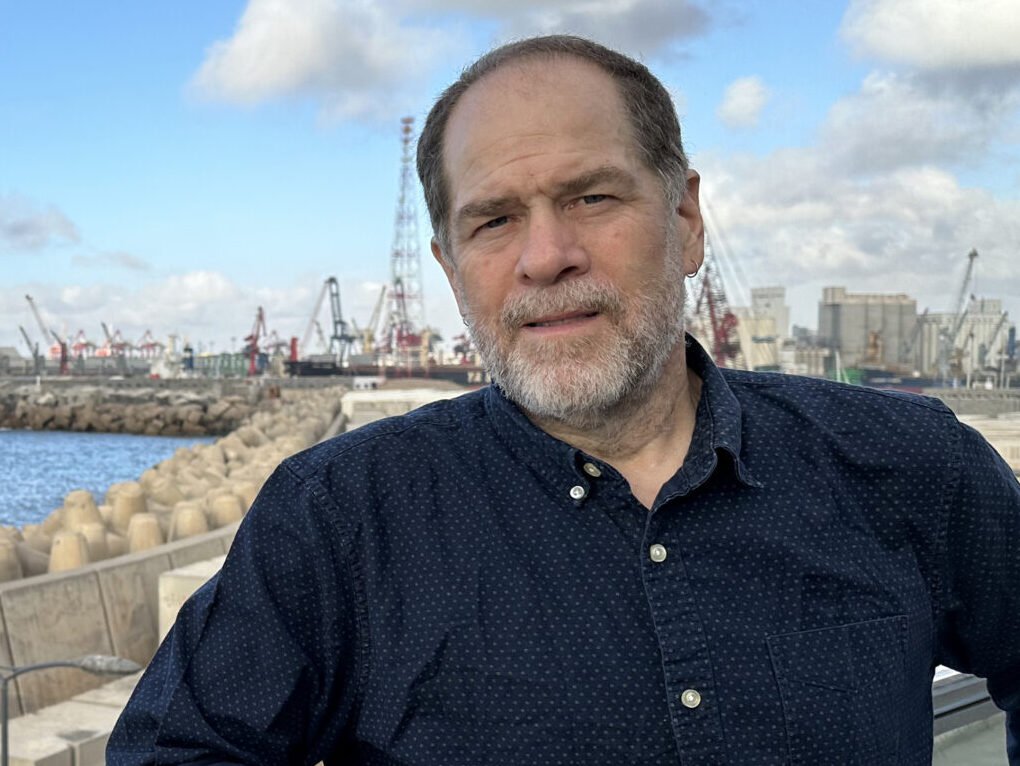
Eric Bond
For the past 13 years, Eric Bond has been listening and sharing the experiences of people impacted by the HIV pandemic as the lead storyteller at the Elizabeth Glaser Pediatric AIDS Foundation. has been documenting lives and elevating voices for four decades as a journalist. He is an award-winning photographer and podcaster. “Working at EGPAF has been a daily reminder of what really matters and what connects all of us,” he says.
Eric is based in Washington, DC.
To be Continued
A Generation Born Free — Can We Keep That Promise?
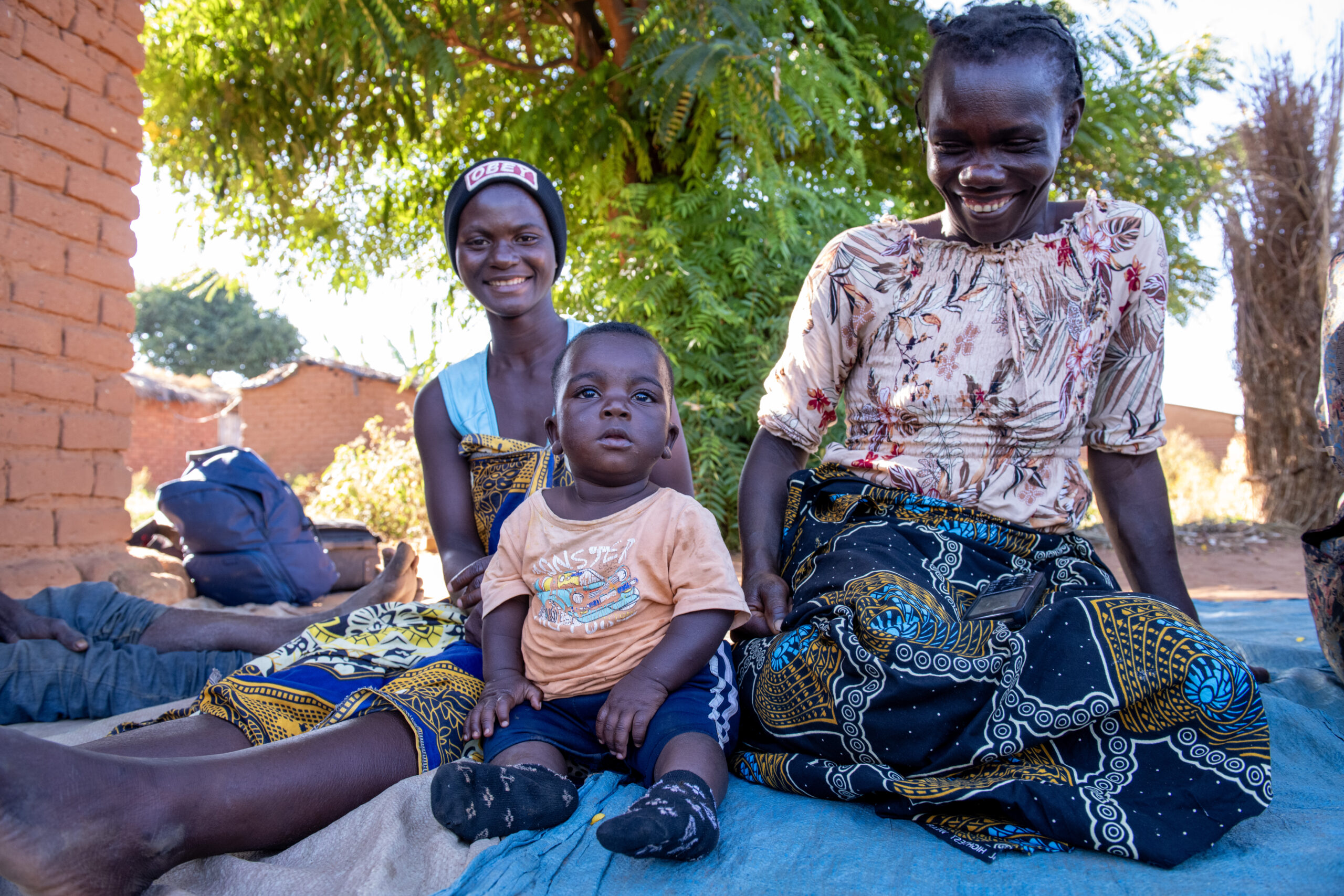
Read how Leah helped mentor Felicia, a mother living with HIV, through receiving prevention services that allowed her to give birth to her son, who now lives HIV-free.