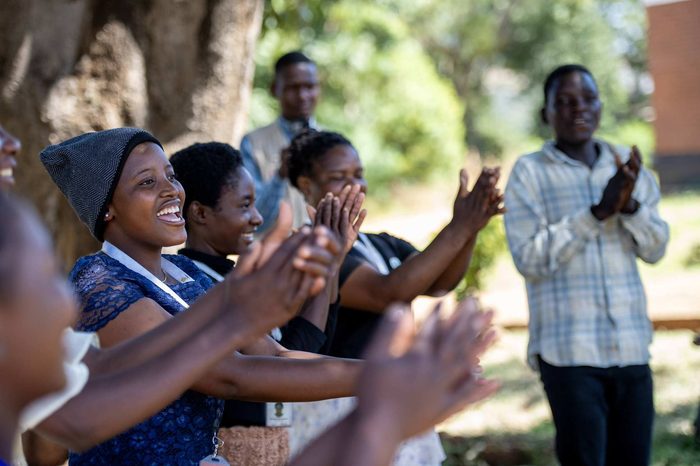
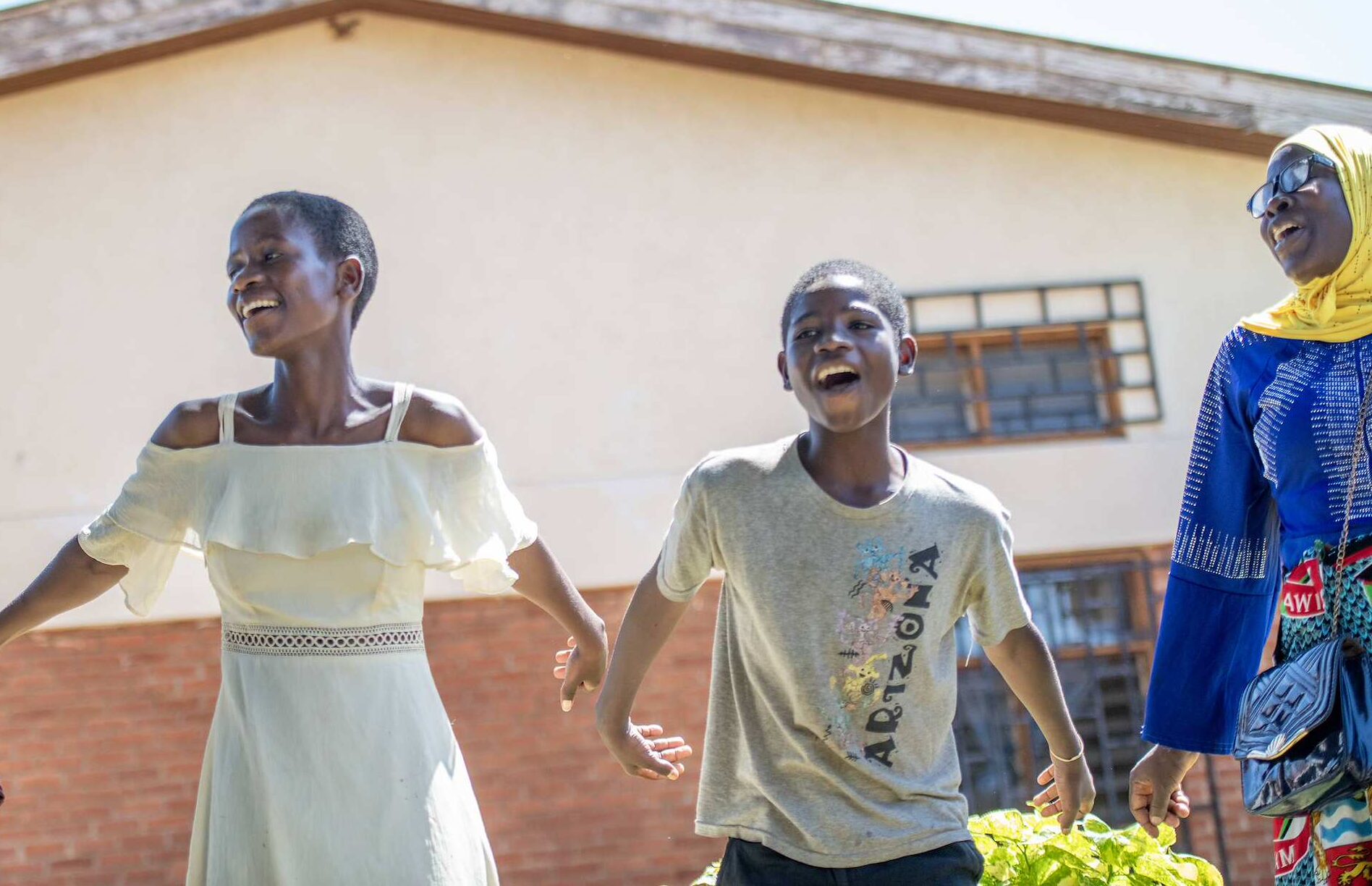
It’s midday Saturday at the Mchinji District Hospital in central Malawi, and spirits are high. Two dozen young people sit along the worn cement benches of the waiting room—ages vary from preteen to young adult. They laugh and chatter and take turns beating on a wooden drum.
A lean and energetic man in light blue scrubs steps to the front of the room. Vincent Nyapigoti has been leading the Teen Club for 11 years as a linkage nurse for the Elizabeth Glaser Pediatric AIDS Foundation (EGPAF). With a wide smile, he leads the group in animated chants and claps.
Then he invites John, a 14-year-old, to come to the front.
John confidently strides forward and faces his peers. They cheer as he unrolls a poster, and clinic staff locates tape to affix it to the wall. At the top, are the words, “My Vision.”
“I would like to show what I will have in the future,” says John in Chichewa, the official language of Malawi.
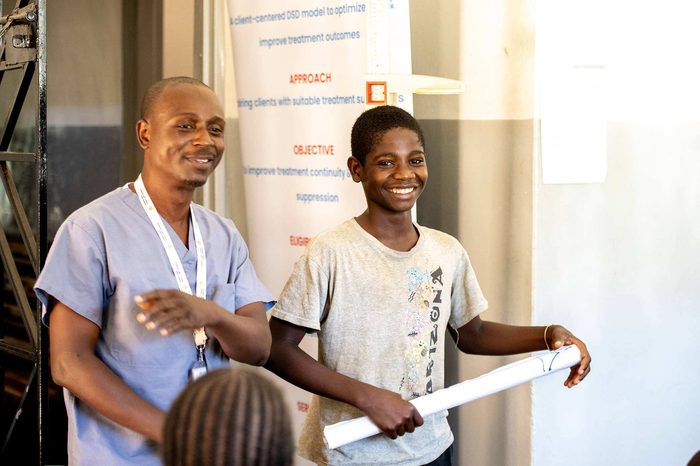
He points to an image of a man with a beard, a stethoscope hanging around his neck.
“That person looks like a doctor, as you can see. It is a senior doctor, I would like to be a chief doctor at a hospital.”
John points to a building with three turrets: “See that house. I would like to build a mansion.” Parked in front of the mansion, a Lamborghini.
On the other side of the paper, another building with another car in front of it. “That other house is an orphanage that I will build,” says John. “That’s another car. It is not for personal use. It is so that my workers will be using it to take children to the orphanage.”
The room erupts in applause and whoops. An older boy beats fast on a wooden drum.
“Nobody can kill our dreams,” says John, once the din dies down.
He explains that at one point in his life, he lost his dreams for the future. John was born with HIV. His mother died of HIV-related causes.
“I Decided That I Can Live”
“The first day I came to this facility, I was told, ‘You have an infection in your body. It is HIV,’” says John. “After being told that I was infected, it was very painful.”
He feared that he would be shunned, and he feared death.
But then John explains that the staff at the youth-friendly clinic restored his hope. “I received support from psychosocial counselors and everyone who works here from EGPAF and the Ministry of Health.” Psychosocial counselors provide support by identifying and helping to address the factors that may negatively impact a child’s mental and emotional well-being.
“With the support I was given, I went home and decided that I can live,” says John.
He returned to the clinic the following Saturday to join the Teen Club, a cohort of other children in the community living with HIV—now his cheering fans. And he kept coming back.
Vincent explains to me later that he gets immense pleasure witnessing children and adolescents dream about their futures, to see themselves as adults.
Fun and Games, with a Purpose
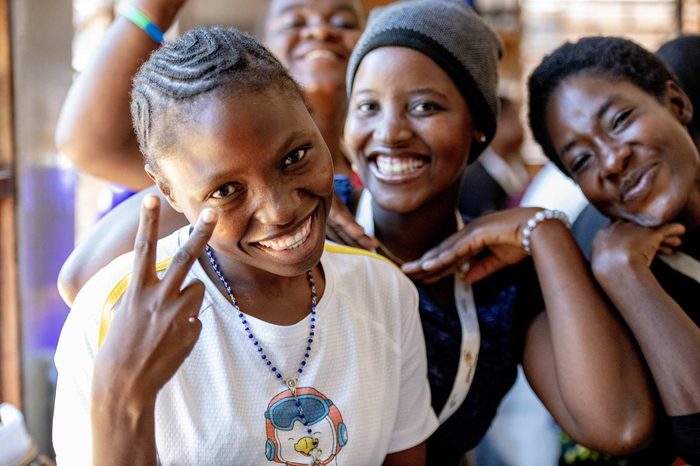
The Teen Club provides a space where children living with HIV from the age of 8 to young adult can come and pick up their medicine without any pressure of stigma. Vincent and the rest of the staff have been trained in the Adolescents’ Package of Care, a training curriculum that among other things orients healthcare workers to provide adolescent- and youth-friendly services. They are able to sensitively counsel children and help them feel safe as they access HIV care.
A hospital is not a natural place for a child, says Vincent. These children regularly have syringes poking them to draw their blood for their viral load tests. They are given medication that their friends at school are not getting. Sometimes there are bad reactions to the drugs, or the child has trouble swallowing them.
They can feel like there is something wrong with them—when there is actually nothing wrong with them, says Vincent. They are normal children with a manageable medical condition. If they know this, they can be encouraged and confident
“So we make it welcoming here with toys and games and staff who come to know the children and treat them like their nieces and nephews.” Along with clinical services and health education, the staff also dedicates time to play with the children and adolescents in the open space behind the clinic. This makes the whole clinic experience more appealing.
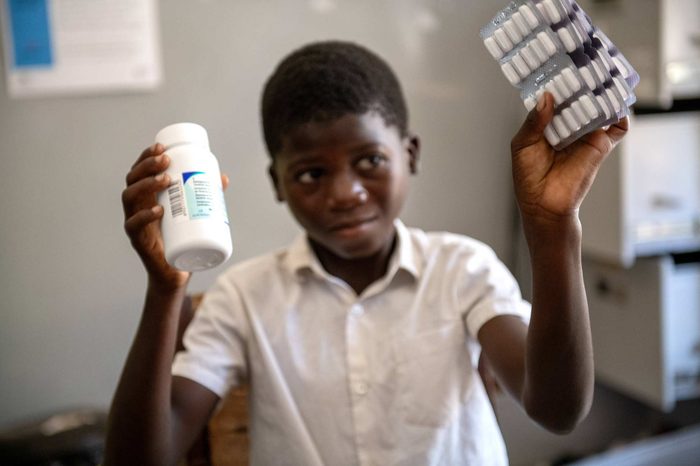
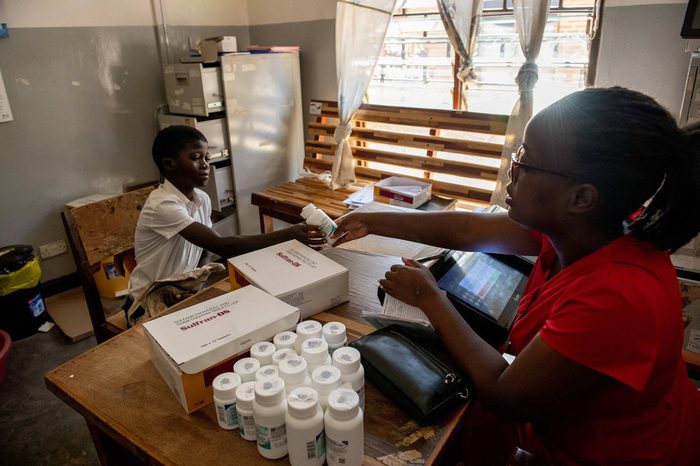
Vincent reiterates that the fun and games at the Teen Club have a serious purpose, enhancing their continuation of care. Children living with HIV in Malawi remain at great risk for advanced HIV disease. Only 58% of children age 14 and younger who are living with HIV are adhering consistently to lifesaving ART, according to Malawi’s National AIDS Commission. This means that some children continue to die of HIV-related illnesses and that some older adolescents continue to transmit HIV to others. The Teen Club helps stop this cycle.
Passing the Vision to Other Children
Vincent says that foreign aid disruptions have had the hardest effect on programs that link surrounding villages to the clinic. Community health workers have proven successful at educating the public and helping individuals access HIV services at Mchinji District Hospital. But many of those networks have unraveled.
“We need to train more community health workers. We need to give more incentives to community volunteers. We need to give more trainings to religious leaders. But there are few funds that focus on community,” says Vincent.
“Why am I saying this?” asks Vincent. “These children, they live in the community.”
Then he points out that one of the heartening aspects of the Teen Club is the way that older children look out for the younger ones. “So they are mentored. They are taught to understand what fighting HIV is—its prevention as well as treatment. They pass on the baton to the young ones—and when the young ones grow, they will also pass it on to others.”
Vincent does not see this knowledge stopping at the door of the clinic. “They are taught like missionaries, so they take the message to the community.” Several young adults who grew up through the Teen Club currently receive a small stipend as youth advisors to help bring children and adolescents to care and provide peer counseling.
Vincent emphasizes that spreading knowledge about HIV is essential. He knows of many people, including children, who have died in the recent confusion about HIV services. So Vincent is praying that the Mchinji Teen Club will continue to have funding to go forward and continue to help children like John have a bright vision.
We need to focus on the youths, the adolescents,” he says, “because our future is with them.”