For 20 years, the Elizabeth Glaser Pediatric AIDS Foundation (EGPAF) has worked alongside the Government of Tanzania to strengthen primary health care (PHC). Today, EGPAF-Tanzania supports more than 2,000 health facilities across six regions, and more than 75 percent of them are PHC facilities. Our work spans HIV, tuberculosis (TB), maternal and child health, cervical cancer, early childhood development (ECD), and health systems strengthening (HSS), delivered alongside national, regional, and council health teams, faith-based organizations, and local government authorities.
Over the past two decades, our role has shifted. In the early years, we focused on expanding access through donor-supported projects. Today, our focus is strengthening government systems to lead, manage, and sustain services long after any single project ends.
I like to describe that shift with an analogy: we are moving from a “Mercedes-Benz” model of health system support to a “Bajaj” model.
What Does “Mercedes-Benz to Bajaj” Mean?

A Mercedes-Benz is an effective, comfortable vehicle, but it is costly to fuel and maintain. As donor funding declines, a Mercedes-Benz model of health care delivery becomes harder and harder to sustain. A Bajaj, by contrast, is affordable, practical, and built for local conditions. It costs less to run and maintain. It is the model that a country can keep on the road.
The destination has not changed: quality primary health care and universal health coverage (UHC) for every Tanzanian family. What has changed is the vehicle we use to get there.
Sustainability does not mean simply replacing donor funding dollar for dollar; it means finding smarter, more durable ways to deliver the same quality of care.
Why We Had to Change
Declining donor funding is reshaping how PHC is financed across Africa, even as demand for services keeps growing. The 2025 U.S. Global Health Strategy sharpened this reality further, pushing implementing partners, like EGPAF, toward greater country ownership.
For Tanzania, the real challenge was never simply about replacing lost dollars. It was about delivering the same quality of care with resources the country can realistically sustain.
Rather than wait for funding cuts to force change, EGPAF took a critical look inward. We reviewed our overhead costs and technical assistance model, aligned our program design to reduced funding while guaranteeing frontline spending. We also doubled down on our core mission; ending AIDS for children, youth, and families.
Building the Bajaj: How We Restructured
Globally, EGPAF flattened its leadership structure, reduced layers of management from president and CEO down through vice presidents and directors, and integrated technical, program management, and external affairs functions to increase efficiency. Through HealthX Partners, a shared parent nonprofit with PSI and VIYA established in January 2025, we now pool information technology, finance, human resources, and audit functions across organizations.
In Tanzania, we built a leaner headquarters office in Dar es Salaam, moving technical and operational oversight closer to project offices and facilities. This “flatter” structure freed up more staff to support facilities directly, speed up identification and resolution of performance gaps, and concentrated resources closer to clients.
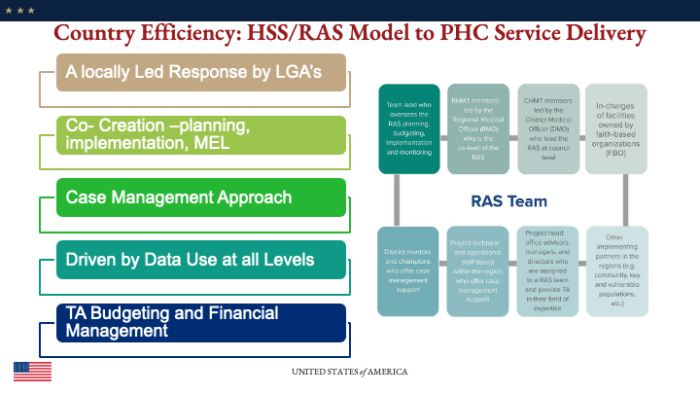
At the center of this restructuring is our health systems strengthening and Regional Administrative Secretariat (RAS) model for PHC service delivery- Bajaj Model. Regional and council health management teams (CHMTs) now lead priorities through joint planning, implementation, and performance monitoring, with EGPAF providing technical support and resources aligned to government systems rather than running parallel structures. Our case management approach follows a continuous cycle of assessment, planning, implementation, coordination, and monitoring and evaluation, repeated site by site rather than rolled out once and left alone.
Data is the engine of the Bajaj model. Through Dawati la Takwimu (“data desk”), we hold weekly virtual reviews of core PHC indicators, using national dashboards and scorecards, alongside monthly progress reviews and quarterly performance meetings with a wider group of stakeholders. We also drove leaner operations: using government venues and offices for meetings and trainings, revising travel policies, renegotiating vendor contracts, reducing office space, and cutting subcontractors from five to two.
What We Saw
Between 2022 and 2026, EGPAF-Tanzania’s annual expenditure has steadily declined, as these efficiencies took hold. Crucially, the savings were not simply absorbed. They were redirected to frontline health care workers and site-level support, the people and places closest to patients.
EGPAF-Tanzania continues to meet program targets. In FY2026, EGPAF-Tanzania has tested over 830,00 people and supported over 178,000 people on HIV treatment.
What We Learned Along the Way
Not every assumption held up. We had assumed that integration of HIV, TB, and early childhood development services into routine PHC was largely achieved. In practice, it was not fully realized across all programs, data systems, training, and mentorship. Gaps in the health workforce at the PHC level also limit how much integration is realistic without additional investment.
Perhaps our clearest lesson: cutting overhead does not automatically protect frontline spending. That protection must be a deliberate design choice, built into the model from the start.
Ultimately, sustainability cannot be achieved through cost savings alone. It requires deliberate, ongoing investment in government leadership and systems, not just a smaller invoice.
The Road Ahead
Sustainability is not only about replacing donor funding. It is about delivering the same quality of care with resources a country can realistically sustain over the long term. By simplifying delivery models, integrating services, strengthening government leadership, and letting data drive decisions, implementing partners can cut operating costs while protecting quality of care.
The goal remains unchanged: quality primary health care and universal health coverage for every family. Only the vehicle changes, from a Mercedes-Benz to a Bajaj.
And at EGPAF, we welcome partnerships with other implementing partners and governments across the region to test, learn, and improve these efficiency approaches together.
About the Author
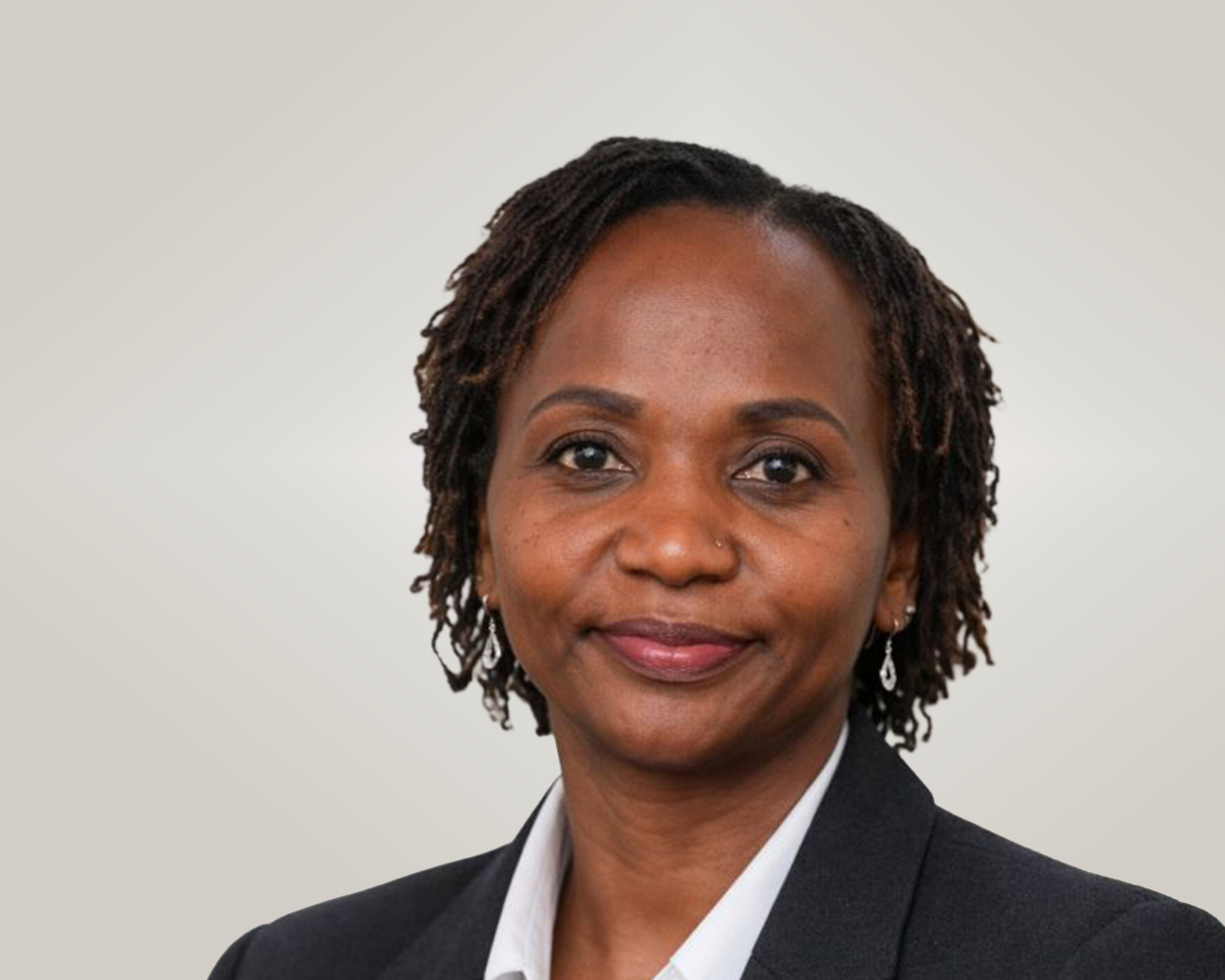
Dr. Sajida Kimambo-Lyimo
Dr. Sajida Kimambo is Country Director of the Elizabeth Glaser Pediatric AIDS Foundation (EGPAF) in Tanzania. EGPAF has partnered with the Government of Tanzania since 2004 to strengthen HIV, TB, maternal and child health, and primary health care service delivery nationwide.
Sajida is based in Dar es Salaam.
More from EGPAF Experts
Story
Why Sexual and Reproductive Health and Rights Matter
Published March 2026
Topics:
Advocacy,
Maternal and Child Health,
Women
Story
Innovation, Financing, and Accountability: What Will Move Maternal Health Forward
Published April 2026
Topics:
General,
Maternal and Child Health
Countries:
Global
Story
A Declaration Is Great. Here Is How We Make It Real.
Published June 2026
Topics:
General