Overview
Children* are disproportionately affected by the HIV epidemic yet are consistently deprioritized and underserved compared to other affected populations. UNAIDS’ global treatment targets call for 95% of people living with HIV to know their status; 95% of people who know their status to be on treatment; and 95% of people on treatment to sustain viral suppression by 2030, referred to as 95-95-95. Globally, children have progressed more slowly than adults across all targets, at 63%-87%-86% compared to 87%-89%-94%. And while just 3% of all HIV cases are children, they are 11% of all HIV related deaths−demonstrating a clear unmet need. While gains have been made in prevention strategies and treatment options, further efforts are needed to ensure an HIV-free generation—an outcome that will save lives, protect families, and strengthen communities and economies.
In 2024, an estimated 2.4 million of the 40.8 million people living with HIV were children and adolescents. Each day, approximately 712 children and adolescents were newly infected with HIV and 250 died from HIV-related causes. With less developed immune systems, children and adolescents living with HIV experience more severe sickness than adults. Eighty-four percent of children with HIV live in sub-Saharan Africa.
The primary way newborns and children under five contract HIV is through vertical transmission,** commonly referred to as mother-to-child transmission, which can occur during pregnancy, labor, delivery, or breastfeeding. Globally, 1.3 million women with HIV become pregnant each year, and without intervention, there is a 15-45% chance of vertical transmission. Most adolescents acquire HIV through sexual transmission.
This policy brief provides an overview of the current landscape of pediatric HIV, highlights prevention, diagnosis, and treatment successes and challenges, and gives recommendations for U.S. policymakers.
* Unless otherwise stated, in this policy brief “children” refers to 0-14 years of age and “adolescents” 15-19 years of age.
** The authors use “vertical transmission” (VT) in place of “mother-to-child transmission” (MTCT), while acknowledging MTCT’s global prevalence. VT more accurately describes the biological pathway by which HIV passes from parent to child during pregnancy, childbirth, or breastfeeding. It also more equitably recognizes that mothers are often recipients of transmission themselves, and avoids language that obscures the social and structural drivers of HIV acquisition in women.
Prevention
Preventing HIV in children starts with halting vertical transmission, one of the main causes of pediatric HIV. When a mother is on antiretroviral therapy and remains virally suppressed, the risk of transmission is less than 2%. Globally, rates of pregnant and breastfeeding women receiving antiretroviral treatment have increased over time: from 46% in 2010 to 84% in 2024. The UNAIDS Global AIDS Brief released in June 2026 shows that as many as 87% of pregnant women with HIV are receiving treatment and that prevention of vertical transmission programs averted nearly 4.8 million children from acquiring HIV between 2000 and 2025. Integrated service delivery—combining vertical transmission prevention with routine care for mothers, babies, children, and adolescents—is especially critical to improve health for both women and children.
As children get older, their risk of HIV exposure changes, as does effective prevention. Education is key to ensuring children and adolescents understand their risks of infection and available means of prevention. For older children and adolescents, prevention may include pre-exposure prophylaxis (PrEP), medication taken prior to exposure, or post- exposure prophylaxis (PEP), a treatment started within 72 hours of HIV exposure. PrEP is a highly effective prevention tool, particularly for people at higher risk of contracting HIV; both PrEP and PEP use the same medicines as treatment regimens.
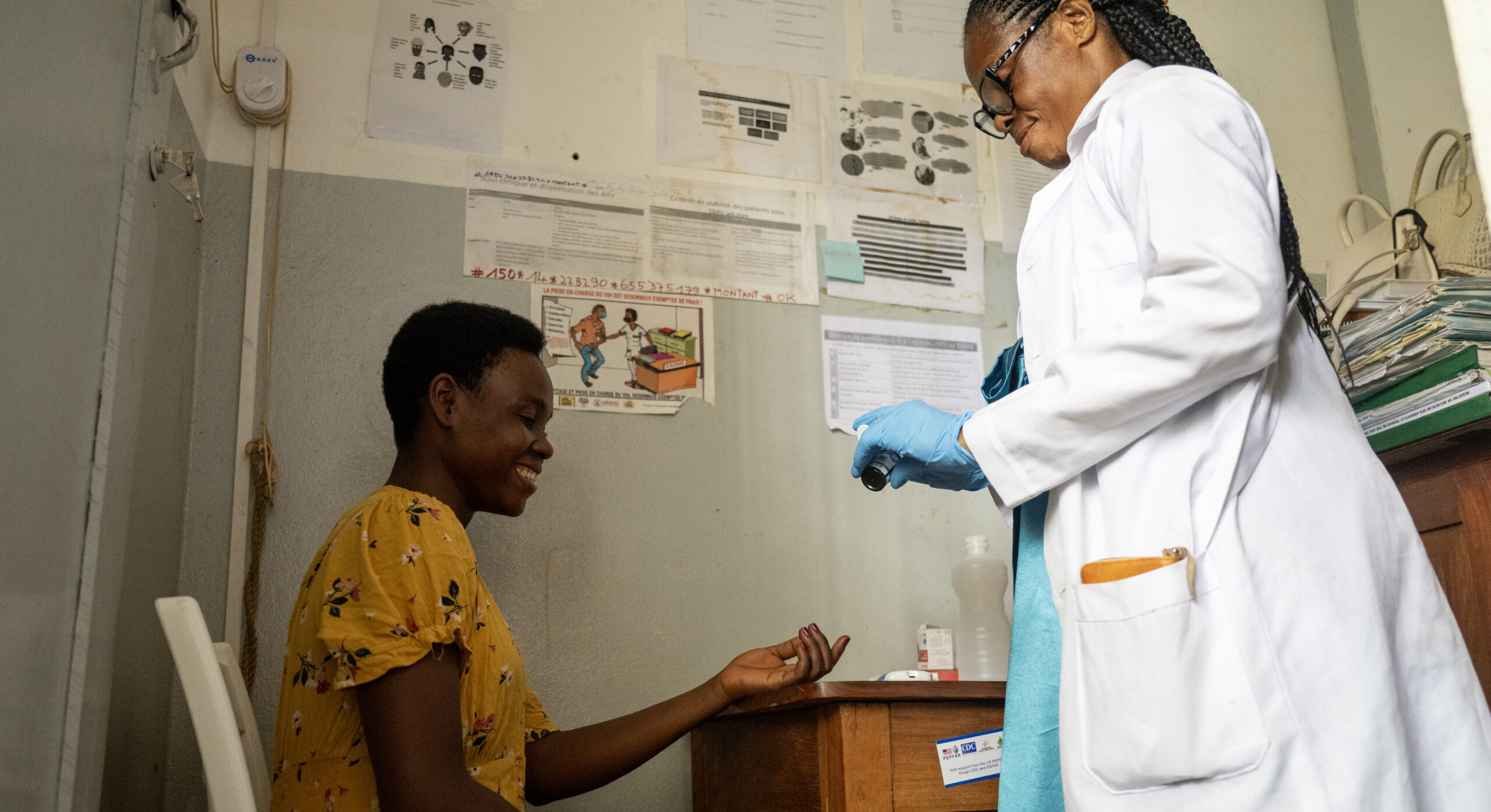
“I Feel like a Winner”
After testing revealed Adrienne was HIV-positive, she feared her dream of having children was shattered. Mentor mothers at Ebolowa Regional Hospital in southern Cameroon assured her otherwise—that she could live fully with HIV and even have children. Adrienne was skeptical at first but enrolled in a prevention of mother-to- child transmission (PMTCT) program when she became pregnant two years later. She gave birth to an HIV-negative daughter, then two more HIV-negative children.
“I feel like a winner because I’ve been able to save my children from growing up with HIV.”
Testing and Diagnosis
Testing is a necessary component of prevention efforts. The World Health Organization (WHO) recommends that infants born to mothers living with HIV are tested by two months of age, during breastfeeding, and when breastfeeding ends; as well as regular testing for older children living in high-prevalence regions. Globally, only 67% of infants born to pregnant women living with HIV received a blood test to detect HIV within the first two months after birth.
Follow-up appointments and testing for both mother and baby, particularly at 12 months and 24 months postpartum, are key to capturing new infections among breastfeeding children and mothers who may have become newly infected. If children living with HIV are not tested and treated, half will die by the age of two, and 80% will not live to the age of five. Early infant diagnosis (within the first two months after birth) and initiation of antiretroviral therapy (ART), a combination of medications used to treat HIV, is particularly vital for infants and children, as treatment following early diagnosis can reduce HIV-related infant mortality by up to 76%. And yet, only 30% of children at risk in western and central Africa receive an early infant diagnosis, as compared to 74% in eastern and southern Africa.
Point-of-care (POC) early infant diagnosis uses innovative technology to deliver HIV test results during a single clinic visit, unlike conventional laboratory testing that could take more than a month for results. Research shows that POC testing for early infant diagnosis can increase testing rates, improve the share of test results returned to caregivers within 30 days, and increase the number of infants with HIV who start treatment. It also generates health systems savings, in part because faster results mean fewer children are lost to follow-up while waiting for results, and because fewer children will need to be re-tested after lapses.
Barriers to early infant diagnosis include the lack of access to testing facilities, the cost of polymerase chain reaction (PCR) testing technology, challenges of setting up testing infrastructure in low-resource areas, and the difficulty of follow up testing throughout the first six months after birth as recommended.
Recent innovations like digital health strategies, including online services and text message follow-ups, have expanded outreach to communities with fewer resources, and have been effective at reducing stigma and building trust in healthcare systems.
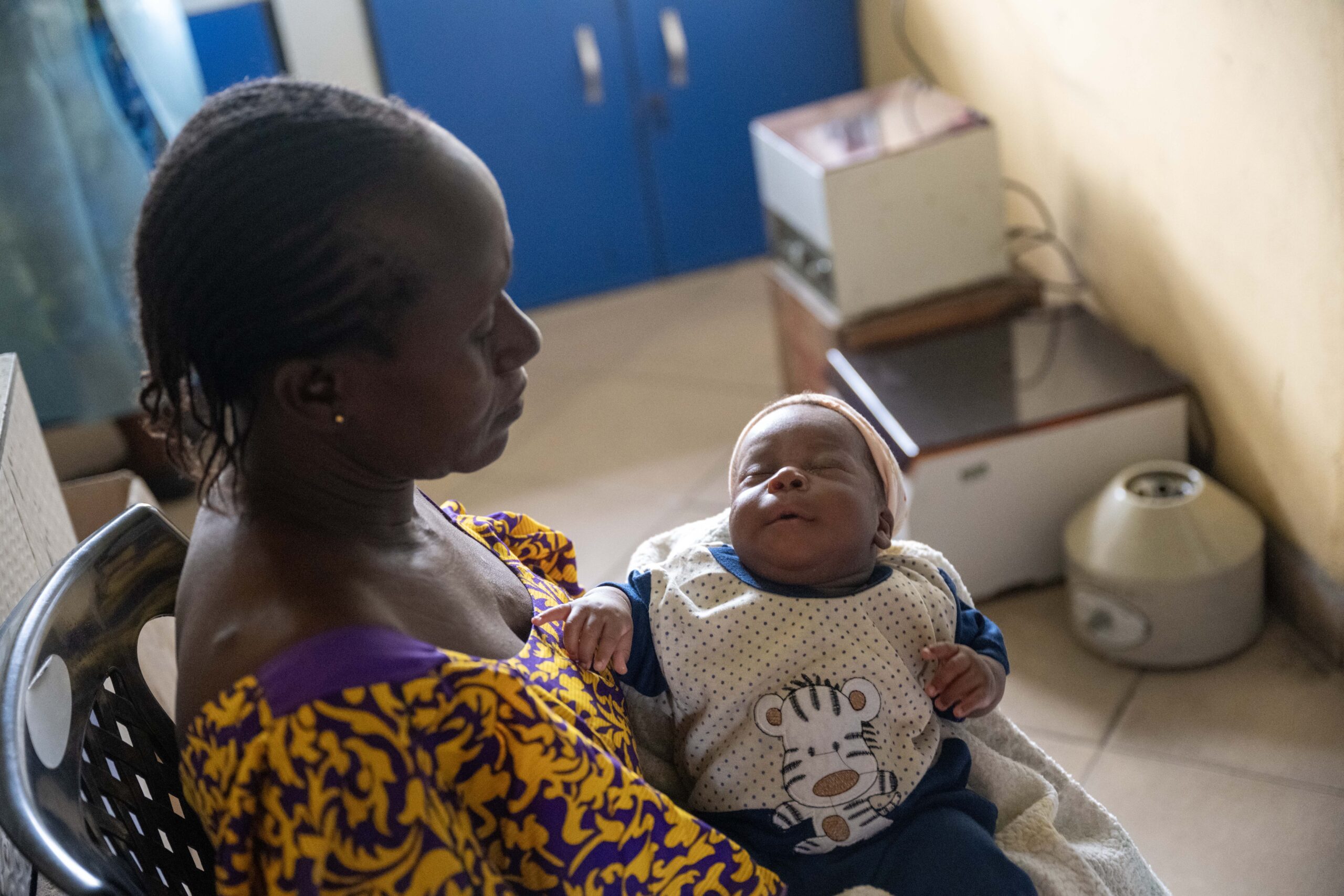
Babies of Hope
Treatment
Once diagnosed, it is critical that children and adolescents remain on medical treatment to stay healthy through adolescence and adulthood. HIV is treated through a prescribed regimen of antiretroviral medicines. While only 54% of children living with HIV are on antiretroviral therapy, this is a significant improvement from just 17% in 2010. Some 77% of all people living with HIV are on treatment, illustrating that alongside progress, children continue to experience a significant treatment gap.
Children face particular barriers to treatment. New antiretroviral drugs are primarily formulated for adults, creating a lack of child-friendly formulations of HIV treatment. The WHO recommends pALD—pediatric abacavir, lamivudine, dolutegravir—a tablet taken once a day, simplifying treatment for children living with HIV. Studies show children under five are disproportionately vulnerable. Even among children receiving ART, a higher proportion of children under five die or have interruptions in treatment than any other age group. Interruptions in treatment have severe consequences. A review of children who received PEPFAR-funded treatment found that nearly 20% of children under the age of one who experienced treatment interruption died. Treatment disruptions and losses to follow-up can also lead to underreported child deaths, which suggests that the number of deaths among young children is even higher than reported.
Studies show that the health status of a caregiver living with HIV directly impacts the ability of a child with HIV to maintain viral suppression. If the health of the mother declines, similar declines occur in the child’s health outcomes during the first five years of life, resulting from missed appointments, inconsistent medical treatment, and decreased ability of the mother to both care for her child and navigate the health system. Research also shows that integrating services for mothers and babies at risk for HIV infection, including vertical transmission prevention, can help keep mothers and babies in care.
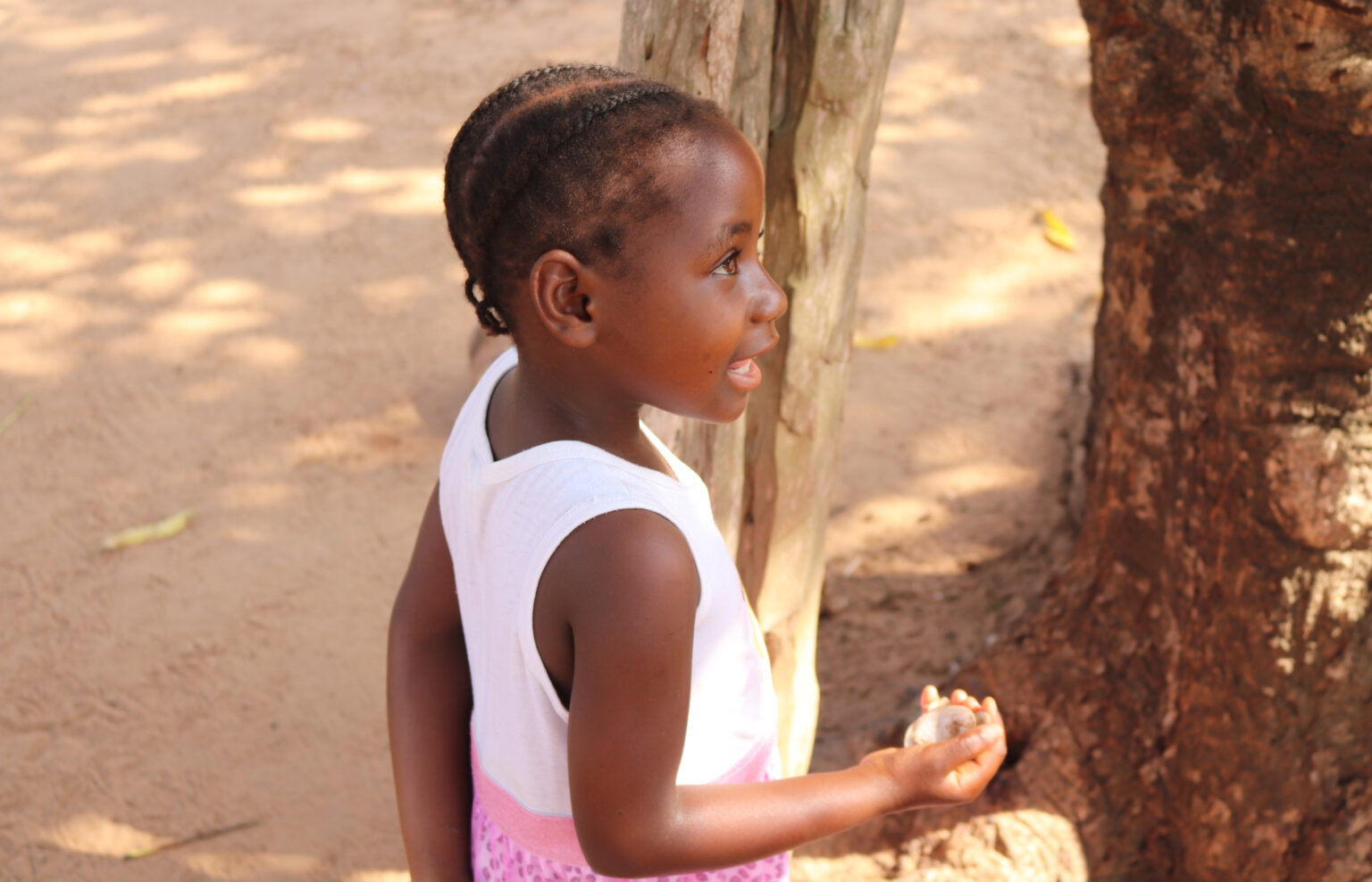
Berta is Smiling Again
Berta, a young girl living with HIV in Mozambique, was orphaned by age five after both her mother and father died from HIV-related causes. When Berta’s aunt and uncle adopted her, they did not know her HIV status or that she needed to take daily antiretroviral medication. Berta was struggling with a persistent cough, weight loss, and a swollen stomach; she was too young to share her clinical history with her new caregivers. Following an intervention by community health workers, Berta was tested for HIV and reenrolled
in treatment. Today, Berta’s family helps her take her medication, attend appointments, and stay healthy.
“The whole family stood by her and took responsibility for supporting her,” said Berta’s uncle.
Innovations in Treatment
New treatment options have made HIV care more effective and easier to access for both children and adults. In recent years, advances in ART and PrEP have made HIV a manageable chronic condition. Research also shows that dolutegravir-based treatments are effective in treating newborns with HIV with no adverse effects. Initial trial results also suggest that beginning ART immediately after birth is highly effective at reducing the HIV virus to undetectable levels and may help some babies achieve treatment-free remission for 48 weeks or longer.
ART has evolved from daily oral medication regimens to long-acting injectable and immunotherapeutic treatments that require only a few doses each year, increasing adherence. For pregnant women at risk of HIV infection, injectable PrEP and the dapivirine vaginal ring are safe during pregnancy, offering protection to mother and baby. In 2026, the U.S. government and the Global Fund announced a plan to make injectable lenacapavir available to 3 million people by 2028, increasing their previous commitment by 50%.
Recommendations
The following recommendations provide a framework for U.S. policymakers to improve HIV prevention, diagnosis, and treatment efforts for children and adolescents:
Expand funding for early infant HIV diagnosis technologies
Funding should be directed toward greater point-of-care testing capacity, which often provides same day results to caregivers. Where point-of-care technology is not available, prioritize digital follow-up programs, including text message outreach, which reduces stigma and improves continued engagement with the health system.Invest in the development and distribution of child-friendly ART formulations.
Increase research into, and procurement of, pediatric-specific medications, including the WHO- recommended pALD, which combines three drugs into one kid-friendly flavored tablet, that can be dissolved in water for easy administration and is taken just once daily. Child-friendly medications are more convenient for both caregivers and children, linked to improved treatment adherence, viral suppression rates, and health outcomes.Fund integrated maternal and child health service delivery models in high-prevalence regions.
Prioritize funding for combined maternal and child health service models that keep mother-baby pairs together at every stage of care, helping to ensure that a child’s HIV diagnosis, treatment, and follow-up are anchored to an existing relationship with the health system enabled by the mother.Increase investment in, and distribution of, long-acting injectable PrEP for pregnant and breastfeeding women, and for adolescents at risk of acquiring HIV.
Dedicate funding for the 2026 U.S.-Global Fund commitment to expand access to lenacapavir in high- burden countries. Support should include better distribution, provider training, and community outreach. Prioritize adolescents and pregnant and breastfeeding women who are not being reached by existing PrEP programs.Address additional barriers to adolescent HIV prevention through targeted research and programming.
Recognize prevention barriers particular to adolescents, including stigma and lack of adolescent health education and services; fund adolescent-specific prevention strategies as integral to, not separate from, broader pediatric HIV policy.
To view acknowledgements and endnotes, download the brief here.
Want to learn more?
Common Ground for Global Health Policy Brief: Adolescent HIV
This policy brief explains the current landscape of adolescent HIV, with a particular focus on adolescent girls and the barriers they face regarding prevention, diagnosis, and treatment, and provides recommendations for U.S. policymakers.