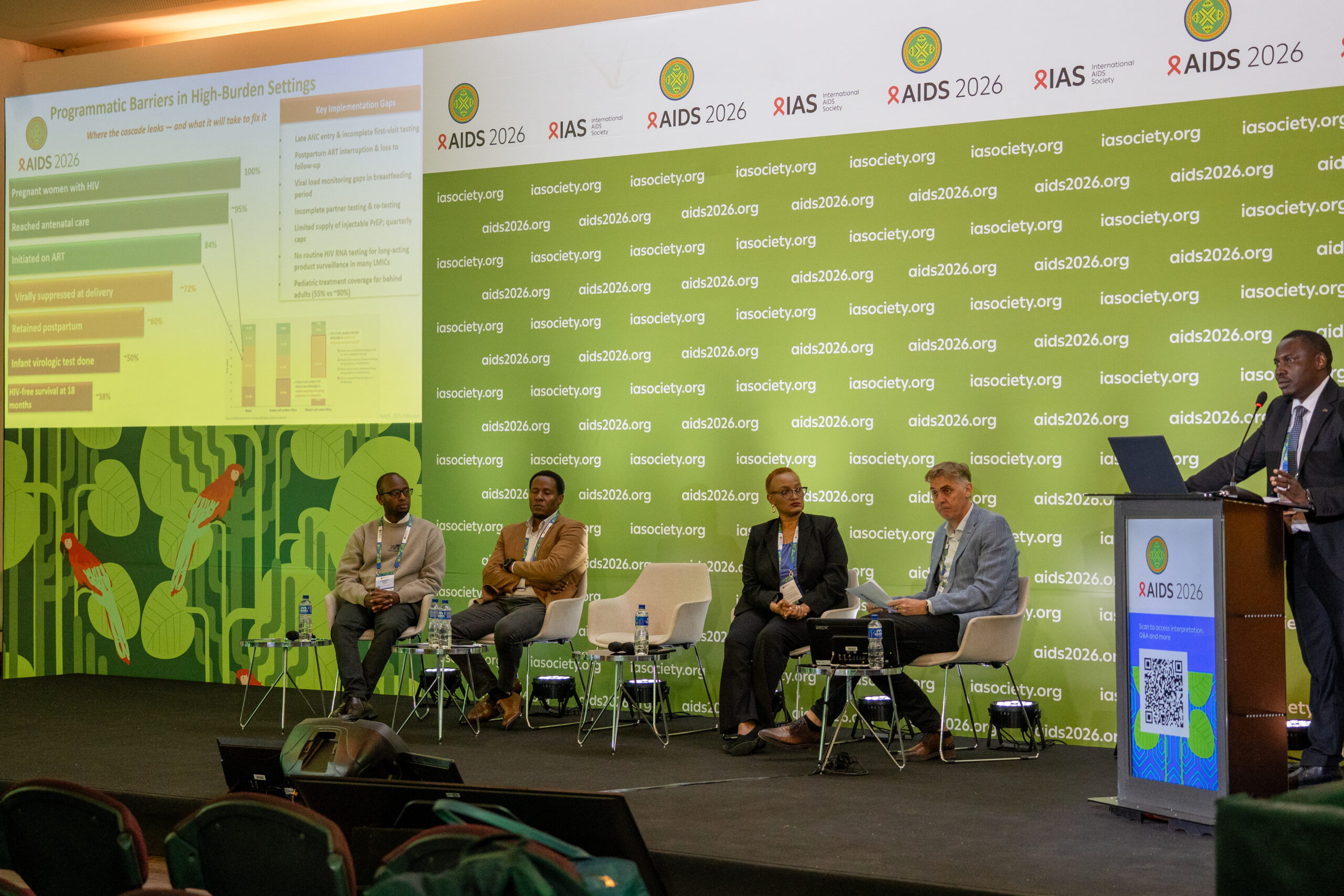
This study explores how monoclonal antibodies against HIV could provide a new opportunity to further reduce mother-to-child transmission of HIV and propose that new interventions should consider issues related to implementation, feasibility, and access.
Explore Related Resources
A cough monitor having a review meeting with a mother at ndhiwa Subcounty hospital.EGPAF worked in partnership with ministry of health Homabay county to implement CaP TB (Catalyzing Pediatric TB). CaP TB sought to reduce childhood illness and deaths due to TB in Homabay and Turkana counties by developing, implementing and documenting innovative models of care and catalyzing their wide-scale implementation to improve case detection and treatment.
Journal Articles
Innovations to improve identification of TB and SARS-CoV-2 infections in sub-Saharan Africa
Published July 2026
This supplement highlights research on integrated COVID-19 and tuberculosis services to improve diagnosis, care, and health system resilience in Cameroon and Kenya.
View Resource
Topics:
Research,
Tuberculosis (TB)
Countries:
Global
Journal Articles
Unfinished Business in Elimination of Vertical HIV Transmission and Ensuring HIV-Free Survival
Published June 2026
Journal of the International AIDS Society: Volume 29, Issue S1 How do we finally end pediatric HIV? A new supplement from the Journal of the International AIDS Society unpacks this vital question. Co-edited by EGPAF’s Lynne Mofenson, with a commentary from Team EGPAF, the supplement describes the innovations that can finally eliminate vertical transmission and ensure children […]
View Resource
Topics:
HIV,
Prevention of Mother-to-Child Transmission (PMTCT)
Countries:
Global
Journal Articles
Breastfeeding, Antiretroviral Therapy, HIV Transmission, and the HIV Reservoir
Published October 2024
Recommendations on breastfeeding by persons living with HIV (PLWH) have shifted globally over time. Because the absolute risk for HIV transmission through breast milk in the absence of antiretroviral therapy (ART) is as high as 16% to 20%, recommendations for low-resource settings in the early 1990s initially emphasized replacement feeding if acceptable, feasible, affordable, sustainable, […]
View Resource
Topics:
Prevention of Mother-to-Child Transmission (PMTCT),
Research