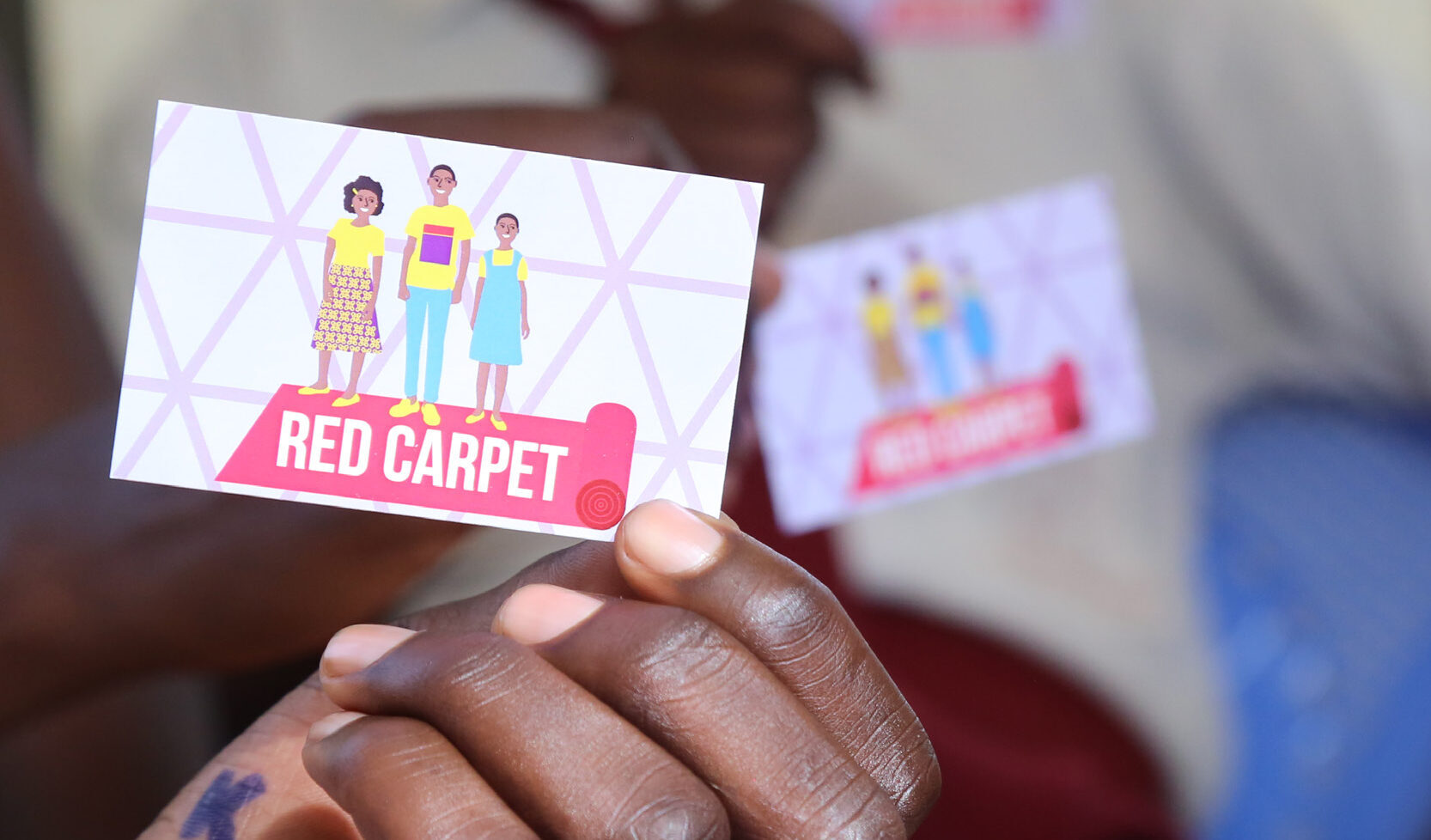
Adolescents and youth living with HIV (AYLHIV) often face significant challenges in HIV care. Elizabeth Glaser Pediatric AIDS Foundation in Malawi implemented the Red-Carpet Program (RCP) to provide fast-tracked services for AYLHIV in care.This study aimed to assess the effect of RCP on Provider-Initiated HIV testing, linkage to care and antiretroviral therapy (ART), and retention in care among AYLHIV in Blantyre, Malawi. This quasi-experimental study compared outcomes among newly identified AYLHIV enrolled in four intervention health facilities implementing RCP with those of three non-intervention facilities between July 2020 and March 2021. Non-intervention sites were selected by matching based on patient volumes and baseline retention rates prior to the intervention ensuring comparability with the intervention sites. Proportions and Chi-square tests were used to compare outcomes between the two groups. Kaplan-Meier curves were employed to assess longitudinal outcomes, and Cox regression analysis was used to estimate the hazard of non-retention in care. Data were collected from 475 AYLHIV from RCP sites and 248 AYLHIV from non-intervention sites. In the non-intervention sites, 87% of AYLHIV were female, compared to 78% in the RCP sites. A higher proportion of adolescents (67%) underwent provider-initiated HIV testing at intervention site s than at non-intervention sites (51%), p<0.01. Retention in care was higher in RCP sites, with 67% of AYLHIV in care at 12 months post-initiation compared with 56% in non-intervention sites, p = 0.005. AYLHIV from intervention sites were less likely to experience non-retention than those from non-intervention sites (adjusted Hazard Ratio: 0.47, 95% CI: 0.28–0.80). The implementation of the RCP facilitated higher rates of provider-initiated HIV testing among adolescents and youth. Furthermore, RCP demonstrated the potential to improve retention in care The RCP offers promise for enhancing outcomes among this vulnerable population, emphasizing the need for tailored HIV interventions for adolescents and youth.