By Eric Bond
Lead Storyteller
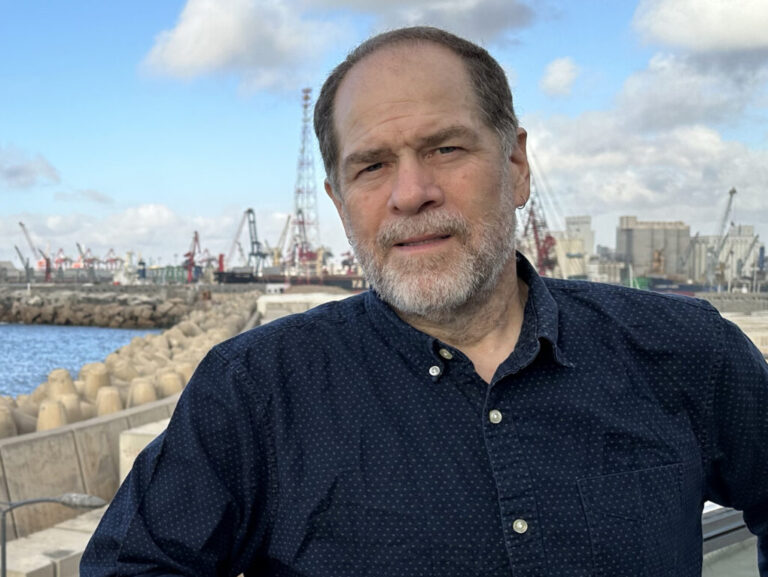
For the past 13 years, Eric Bond has been listening and sharing the experiences of people impacted by the HIV pandemic.
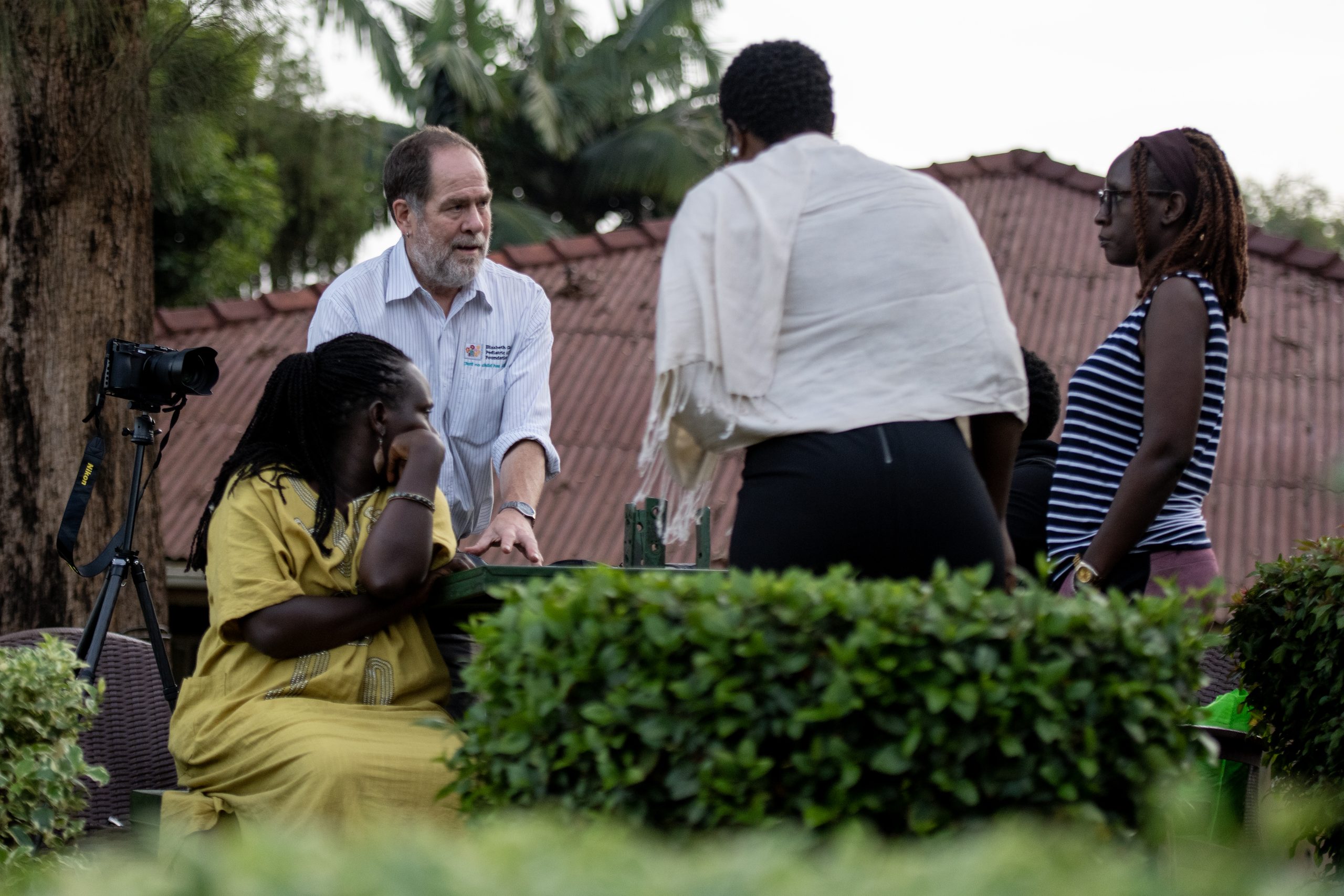
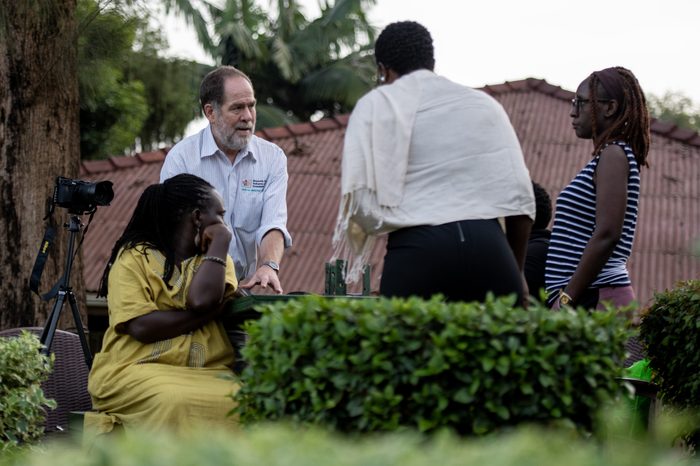
I’m enjoying a traditional Ugandan lunch with young friends at Namirembe Guesthouse in Kampala: matoke (steamed bananas), peanut sauce, fish and beef stews, collard greens, and tea. My four companions chat warmly, catching up with each other.
I am sitting with HIV activists: Mina, a nurse with a toddler; Sheila, a midwife; Hajarah, an entrepreneur and content creator; and Martin, who goes by Bishop. He is an officer at a local nonprofit, Miles of Smiles, that supports children living with chronic conditions.
These 30-somethings are the living legacy of Ariel Camps and Ariel Clubs established by the Elizabeth Glaser Pediatric AIDS Foundation (EGPAF) in the mid-2000s to support children growing up with HIV. The Ariel program was funded through USAID and the President’s Emergency Fund for AIDS Relief (PEPFAR).
We chat about the road that they have taken to get them here, alive and active in HIV response.
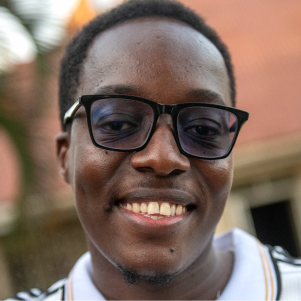
Bishop
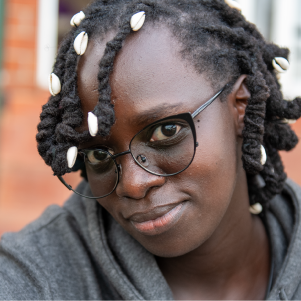
Hajarah

Mina
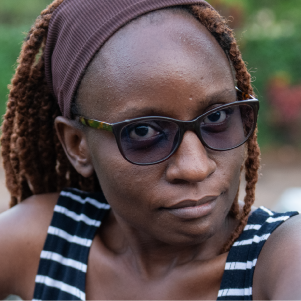
Shelia
The Shock of HIV
Bishop jumps in, looking back on the world in which the Superstars were born: “HIV came into Uganda in the 80s. Around that time, people didn’t know what was happening. Mothers weren’t started on treatment back then, so it made transmission of the virus easier. And that is why very many people in that 90s generation acquired HIV through mother to child.
“We are that generation which came from that shock of HIV,” says Bishop.
“The adults were dealing with the trauma of HIV deaths,” adds Mina, looking back on her childhood. “My mum died from HIV, and I was living with my aunties. I was this sickly child, and my aunties reached a point of saying, ‘Let us just take her home to die.’ I was 10 years old.”
“It was like a death sentence back then,” says Bishop.
By the time PEPFAR arrived in Uganda in 2004, an estimated 1 million children had been orphaned because of the virus, and an estimated 84,000 children were living with HIV. Tens of thousands of children were dying each year from AIDS-related illnesses. PEPFAR worked with the Uganda Ministry of Health and nongovernmental organizations to stock more pharmacies with antiretroviral drugs and fund HIV programs.
“PEPFAR came in a time when we didn’t have the medication,” says Hajarah. “We had zero hopes. But when PEPFAR came in, my god, we saw medicine coming to us.”
PEPFAR expanded existing programs to prevent vertical transmission—meaning that women living with HIV could have HIV-free babies through prevention of mother-to-child transmission (PMTCT) programs.
The Value of Psychosocial Support
PEPFAR also funded psychosocial support groups to help children accept their HIV status and adhere to treatment. Because of its association with death and sex, HIV carried tremendous stigma (and still does in some contexts). EGPAF’s Ariel Clubs and Camps were integral in terms of support for these children.
“Trust me, stigma can kill you very fast,” says Sheila. “So the Ariel Clubs empowered me to be able to accept who I am and love myself.
“Growing up with HIV was hard,” explains Mina, because of the stigma that came with it. She says that when medicine was available, she was not told about her HIV status. Not understanding that the antiretroviral tablets were lifesaving, she would often not swallow them. As a result, her immune system weakened to the point that health workers became alarmed. Finally, Mina’s father told her that she was living with HIV.
“It was, of course, a surprise,” says Mina. “It was hard to take in at the moment.” To help her deal with the jolt, she was referred to an EGPAF-sponsored peer-support group, funded through PEPFAR.
“I remember from that day I was invited to the Ariel clubs and I was like, I’m not alone. There are other people like me,” says Mina.
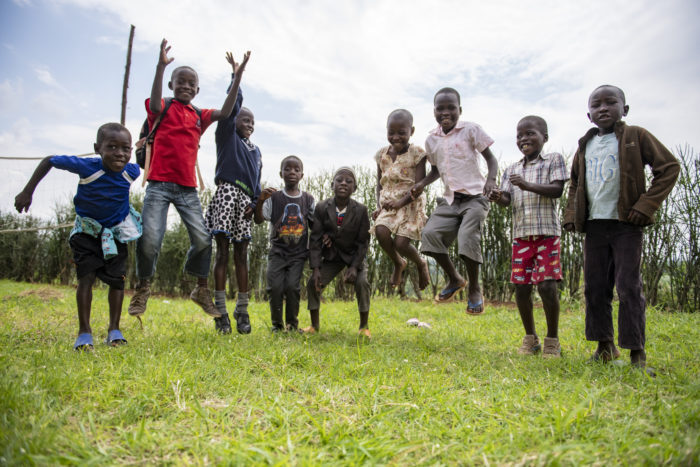
Along with the peer support, Mina touts the child-friendly services that helped her cope with her health condition: “The health workers, they were welcoming, they were loving. They gave us the support we really needed. So even on days you would feel down, they would empower you.”
“My health facility used to hold the Ariel Clubs twice a month,” says Sheila. “So I would look forward to those Saturdays. At home they really didn’t understand me because everyone else was HIV- negative. I’m the HIV-positive one. But when I was with this Ariel group, we understood each other. No one would be pitied.”
Sheila adds that she met her best friend, Mina, through an Ariel Camp. She says that many children formed lifelong friendships because of the solidarity of surviving HIV together.
“Those Saturdays shaped me because I felt like I belong to a community. It helped me to have a purpose and grow up as a purposeful person. Otherwise, I don’t think I would have survived,” says Sheila.
PEPFAR Gave Us New Hope
Because a coordinated effort over the last 20 years, the percentage of infants who acquire HIV in Uganda has declined by 90%. HIV-related deaths overall have decreased by 74%. The Superstars credit PEPFAR for much of this change.
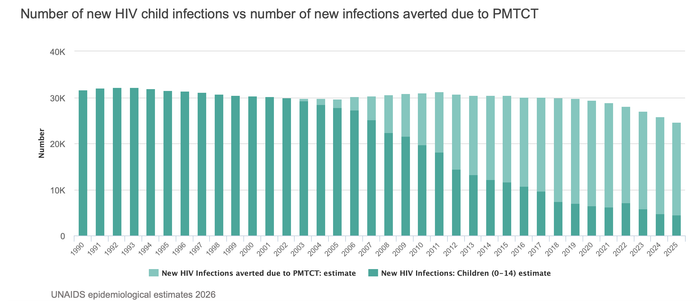
“PEPFAR gave us a new hope,” says Bishop. “As a result, we did not get AIDS. We didn’t get all these other illnesses that can come with HIV. The medicines were there; the psychosocial support was given to us.
“Through PEPFAR, we are alive today. We have grown; we have seen and supported many other young people to grow older,” he says.
“PEPFAR gave us a future,” agrees Hajarah. “We are living a longer life, and we have hopes; we have dreams. We might get even babies in the future because, guess what? PEPFAR made it possible for us.”
Mina speaks from experience in response to that comment.
“As a mother who has been able to give birth to a child who is HIV-negative, PEPFAR has been more than just a program,” says Mina. “It has given hope to mothers, to pregnant mothers, to carry their pregnancies with dignity and to give birth to generations of children who are HIV-free.”
Worries About Funding
However, with cuts to international aid, the Superstars worry about what that means for children who are growing up with HIV now and what it means for pregnant women and mothers living with HIV.
Studies show that, despite the efforts of the Ugandan government, many HIV initiatives in Uganda have slowed or stopped, including viral load testing, community outreaches, and child-friendly services. Widespread layoffs of data clerks, peer counselors, and other clinical staff have overloaded government health workers, correlating to a rise in AIDS-related deaths among vulnerable populations.
“There was a lot of panic,” says Mina about news of the Stop Work order in 2025.
“I was still breastfeeding my son, and I was forced to wean him at nine months because I didn’t know what is going to happen next. I wasn’t sure that I would be able to get my HIV medication and I wanted to make sure that I did not transmit HIV to him.
“Then I thought about transitioning from the facility where I was going to another facility because my facility was supported by an organization that received foreign aid.”
“When the funding cut came, many health workers were laid off,” says Bishop. “So the government just came up with this decision: Let’s integrate all services—HIV, chronic care—put them all in one place and let our government health workers see them. This eliminated many HIV clinics and many child-friendly services.” Children no longer get the peer support that the Superstars experienced.
“We also lost adolescent friendly services like the YAPS program [Young People and Adolescent Peer Supporters],” says Bishop. “Like the Ariel Superstars, YAPS were a group of young people who were trained and empowered to provide peer-to-peer support at health facilities and in the community.
“These programs are what helped eliminate the isolation of living with HIV and gave us the strength to fight on—something this generation may miss out on because of these funding cuts,” says Bishop.
As a health worker, Sheila adds that she sees people living with HIV, especially children, getting lost in the throng.
“It’s also overwhelming for the health workers right now because they’ve been having like over 200 patients, and now they also have HIV patients—meaning that a doctor has over 300 patients alone,” says Sheila.
“These days, the timely following up of missed appointments is no longer as effective since the peer volunteers were laid off,” adds Bishop, “and this has increased the missed appointments.
“Also, I have been getting calls from previous campers that participated in Miles of Smiles camps who are asking for more support because of new challenges they face. And health workers have been calling and asking for more camps because they say that many adolescents are increasingly becoming virally non-suppressed and need a lot of psychosocial support.”
Fighting for the Next Generation
The Superstars agree that antiretroviral medication combined with psychosocial support brought them to the table today, and they advocate for a continuation of those services for children growing up in Uganda.
“Someone else had already done the work, had done the advocacy for us. That’s how we benefited,” adds Mina. “So we also want to advocate for the next generation.”
“It’s about helping somebody else out there to learn to accept themselves and love themselves besides the illness,” adds Sheila. “HIV shouldn’t define them.”
Bishop works for a community-based organization called Miles of Smiles, which works outside of Kampala to replicate the Ariel Club support for children with chronic diseases.
“I look back on that boy who I was,” says Bishop. “That’s why I’m so passionate about children and young people. I want to build the self-esteem of the younger generation, for them to be able to be mentally prepared to attack anything in life. But for that to happen, there have to be peer-friendly services, child-friendly services, adolescent-friendly services, an enabling environment.
“If we don’t stand up right now at the place where we are, many will definitely fall sick, many will die,” says Bishop.
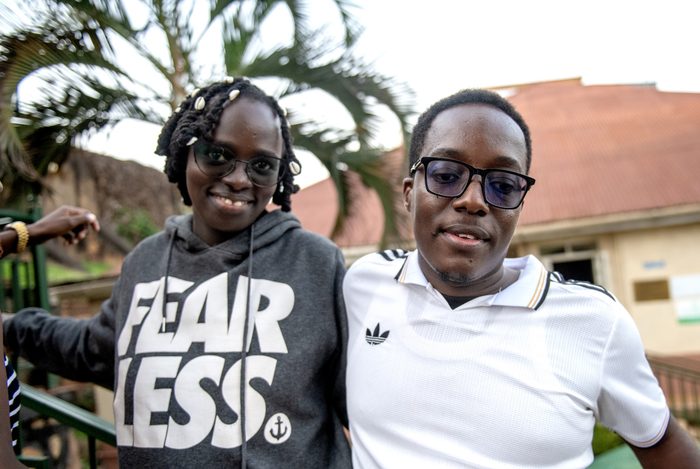
“The reason we are sitting here is that we don’t want other people to be in our shoes,” says Hajarah, who is a social media influencer. “I’m into HIV prevention and mental health through my livestreams. I give my followers the right information about HIV.”
“We’re grateful to PEPFAR, and we pray that we still have the chance and hope to protect the PMTCT programs for future generations,” says Mina.
“We just hope that whatever was done back then can continue,” says Bishop. “We hope that we can continue getting the services for the young people, for the vulnerable, for those who are disadvantaged so that we can end AIDS as soon as possible.”
“We’re grateful to PEPFAR, and we pray that we still have the chance and hope to protect the PMTCT programs for future generations.”
Mina, SUPERstar from Uganda