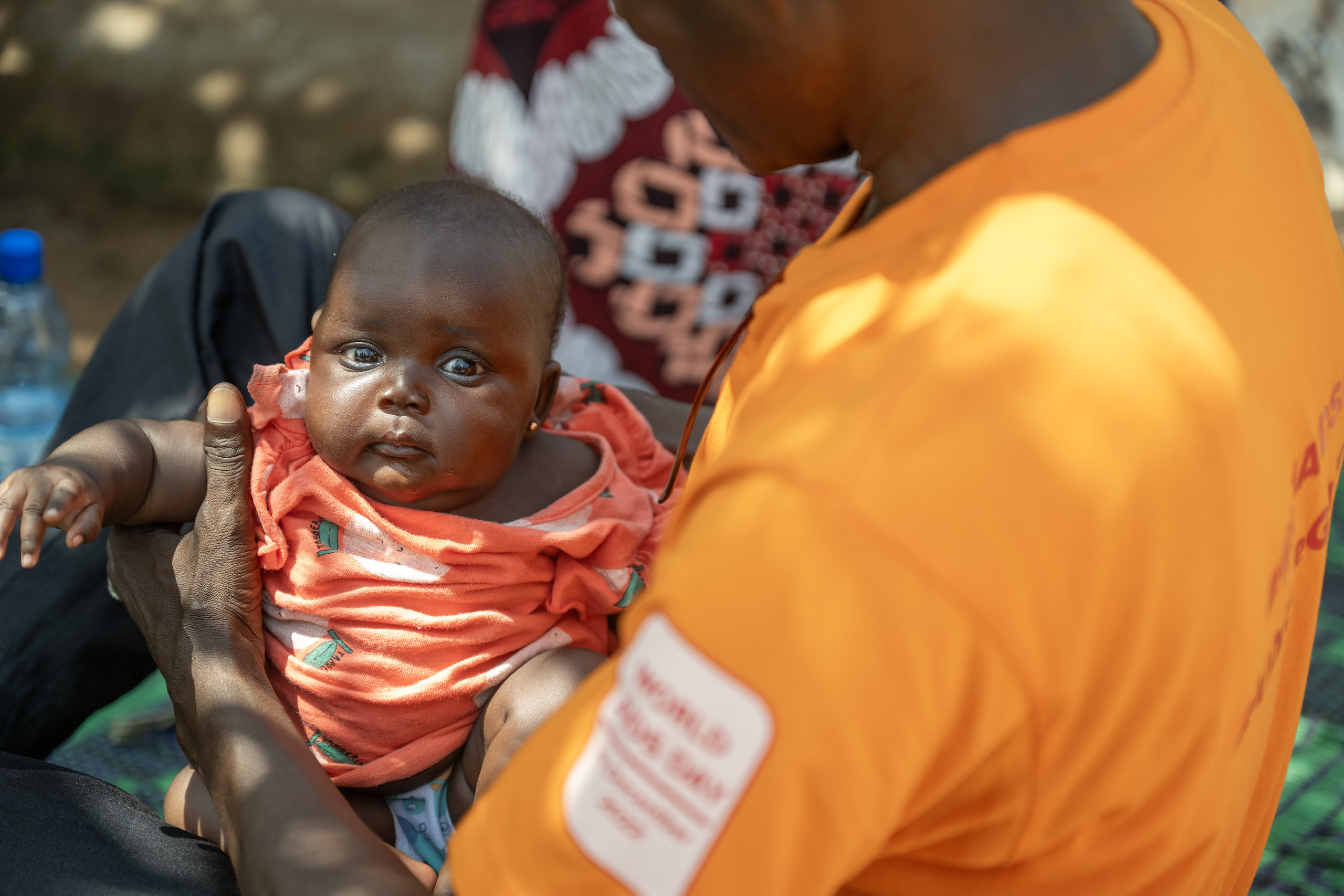
This study assessed the presence, magnitude, and risk factors associated with congenital cytomegalovirus (cCMV) among infants born to HIV-infected women, who were not receiving antiretroviral drugs during pregnancy. The authors found that in-utero HIV infection appears to be a major risk factor for cCMV in infants whose mothers have not received combination antiretroviral therapy in pregnancy.

Explore Related Resources
Issue Briefs
Accelerating Progress to Ending Pediatric HIV
Published March 2026
We are at a critical inflection point for children affected by HIV. In 2024 alone, 120,000 children were newly infected, and, without timely treatment, half of HIV positive infants will not reach their second birthday. Children remain left behind—a child with HIV is 6 times more likely to die than an adult without timely diagnosis. […]
View Resource
Topics:
HIV,
Pediatric HIV
Countries:
Global
Adolescents join for a field day at Lobamba clinic in Eswatini
Journal Articles
Follow-Up Outcomes of Children, Adolescents, and Young People on Darunavir-Based Third-Line Antiretroviral Therapy
Published October 2024
Background: We assessed clinical outcomes among children, adolescents, and people younger than 25 years on darunavir-based antiretroviral therapy (ART) in 9 sub-Saharan African countries. Setting: Third-line ART centers in Cameroon, Eswatini, Kenya, Lesotho, Nigeria, Rwanda, Uganda, Zambia, and Zimbabwe. Methods: From January 2019 to December 2022, we collected data from a cohort of children, adolescents, and young people […]
View Resource
Topics:
Adolescents,
Pediatric HIV
Countries:
Cameroon,
Eswatini,
Kenya,
Lesotho,
Nigeria,
Rwanda,
Uganda,
Zambia,
Zimbabwe
Journal Articles
Breastfeeding, Antiretroviral Therapy, HIV Transmission, and the HIV Reservoir
Published October 2024
Recommendations on breastfeeding by persons living with HIV (PLWH) have shifted globally over time. Because the absolute risk for HIV transmission through breast milk in the absence of antiretroviral therapy (ART) is as high as 16% to 20%, recommendations for low-resource settings in the early 1990s initially emphasized replacement feeding if acceptable, feasible, affordable, sustainable, […]
View Resource
Topics:
Prevention of Mother-to-Child Transmission (PMTCT),
Research