On Monday, March 30, the Lesotho Ministry of Health officially introduced Lenacapavir, a potential great leap in preventing HIV. Gathering in Botha-Bothe District, public health stakeholders applauded as Mokeseng Habasisi became the first person in Lesotho to receive this injectable prophylaxis, which protects against HIV transmission over a period of six months. The Global Fund helped kick off this phased rollout by donating 6,000 doses of the drug.
“[This] handover reflects scientific progress and global solidarity. Innovation must reach those who need it most—and now,” said World Health Organization (WHO) Representative Dr. Innocent Nuwagira. “If implemented effectively, Lenacapavir can accelerate epidemic control, protect the next generation, and bring us closer to an AIDS‑free future.”
“Lenacapavir is an important innovation that strengthens our national response to HIV prevention and brings new hope to communities across the country,” said Deputy Prime Minister Nthomeng Majara. “Over the years, Lesotho’s great strides in the fight against HIV have been made possible through strong partnerships between the government, development, and implementing partners.”
“The Minister was very excited that this is going to be a game changer in terms of the HIV prevention landscape for Lesotho to reach the last mile,” said Seutloali Morebotsane, project director for the Elizabeth Glaser Pediatric AIDS Foundation (EGPAF) in Lesotho. “It really promises us that there is indeed hope for an AIDS-free generation.
WHO has set the goal to end HIV/AIDS as a public health threat by 2030. Lesotho has dramatically reduced the rate of HIV transmission by 83% over the past 20 years, but it still has one of the highest overall rates of HIV in the world, with 17% of the population living with HIV—and as many as 30% of the women.
Lenacapavir, which was developed by Gilead Sciences, offers nearly complete protection against HIV acquisition. This means that if those most likely to acquire HIV—for instance, young women—were getting these injections, it could dramatically reduce new infections, including new infections in children.
“It’s going to be beneficial for both the mother and the child because fewer women will be living with HIV,” said Morebotsane. And the maternal transmission rate to children will, thus, also be reduced.”
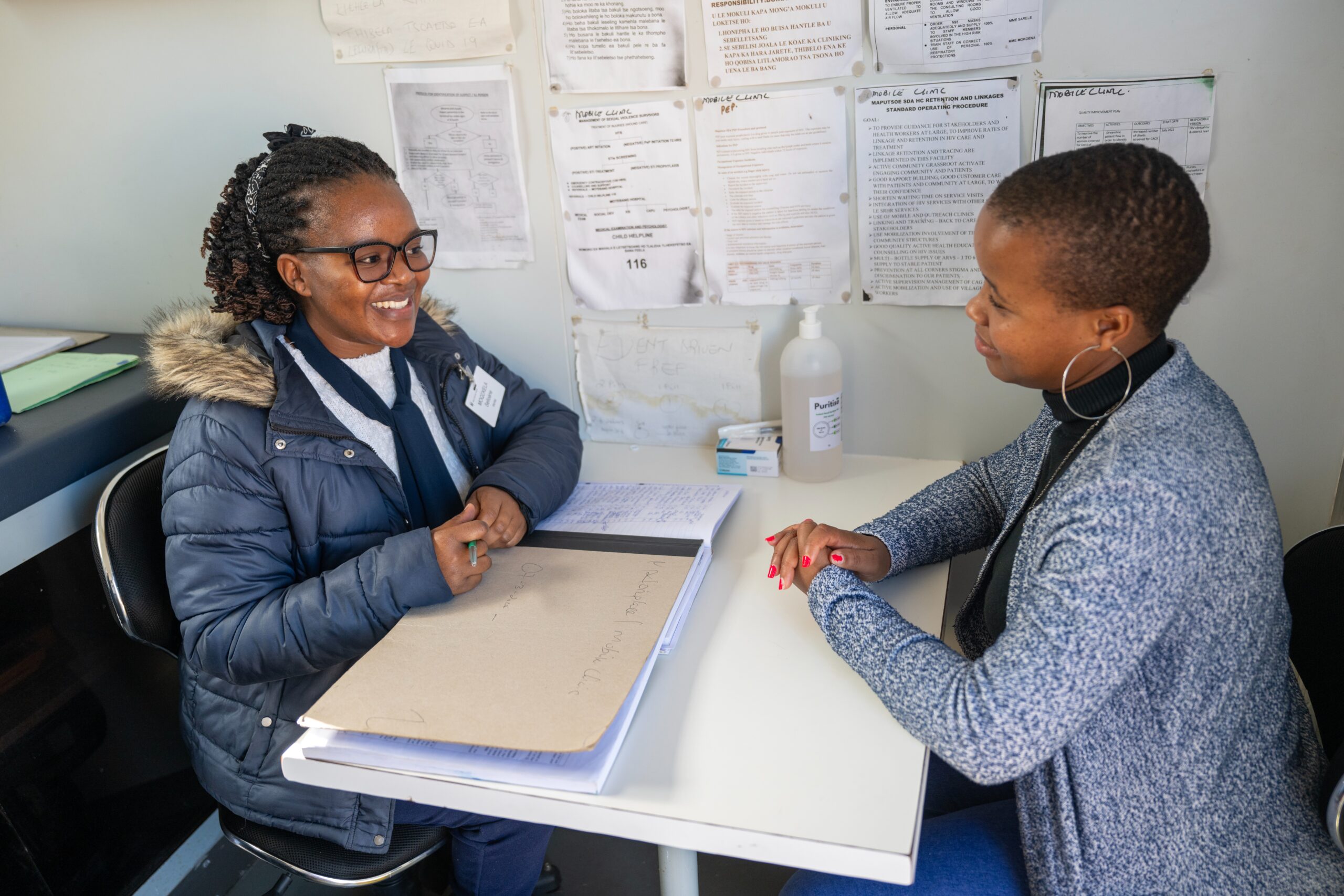
With its sustained experience as a major implementing partner, EGPAF is providing technical advice to the Ministry of Health in terms of developing guidelines for introducing Lenacapavir as well as administering trainings at the national level. It is also contributing technical teams focused on program oversight to ensure that the trainings cascade down to the facility level.
“We are being very cautious to ensure that health care workers do provide comprehensive education around all available prevention options,” said Morebotsane. “It’s particularly important that the client knows that they’ll have to come to the facility every six months to keep the protection. Once they have been initiated on Lenacapavir, they must take four pills over two days. On each of those days, they receive an injection of the drug around the abdomen. For Lenacapvir to be effective, this procedure must be followed precisely, so it is important for health workers and beneficiaries to know what they can expect.
“To assist with this, we have developed a social and behavioral change strategy to ensure that there is proper education and awareness in the community. We have peer educators that are going to the community and educating people about Lanacapavir. They are also going to radio stations and newspapers as well.”
This is a phased roll-out with only 50 of Lesotho’s 231 health facilities currently offering Lenacapavir. It will eventually be available across all of Lesotho’s ten districts. The first doses are going to individuals at greatest risk of acquiring HIV.
These first 6,000 doses were donated to Lesotho and are being offered to clients for free, but Morebotsane notes that he has had some concern about rising costs. At the market rate, each injection would cost $60 (effectively $240 per year for each individual on Lenacapavir). Morebotsane said that he was relieved to hear that WHO has announced a generic version that will be more affordable.
“Public health budgets are leaner these days because of the cuts to foreign aid,” said Morebotsane. “But preventing HIV is always a better investment than paying for treatment over a lifetime.”
“We are immensely grateful and quite excited, to be honest about it. We have a lot of orphans in Lesotho because of HIV. But we hope to go back to the pre-HIV era in Lesotho where we have children, adolescents, adults who are able to live normal lives, prosperous lives, achieve their ambitions and their dreams without being affected by HIV.”
“Over the years, Lesotho’s great strides in the fight against HIV have been made possible through strong partnerships between the government, development, and implementing partners.”
LESotho Deputy Prime Minister Nthomeng Majara