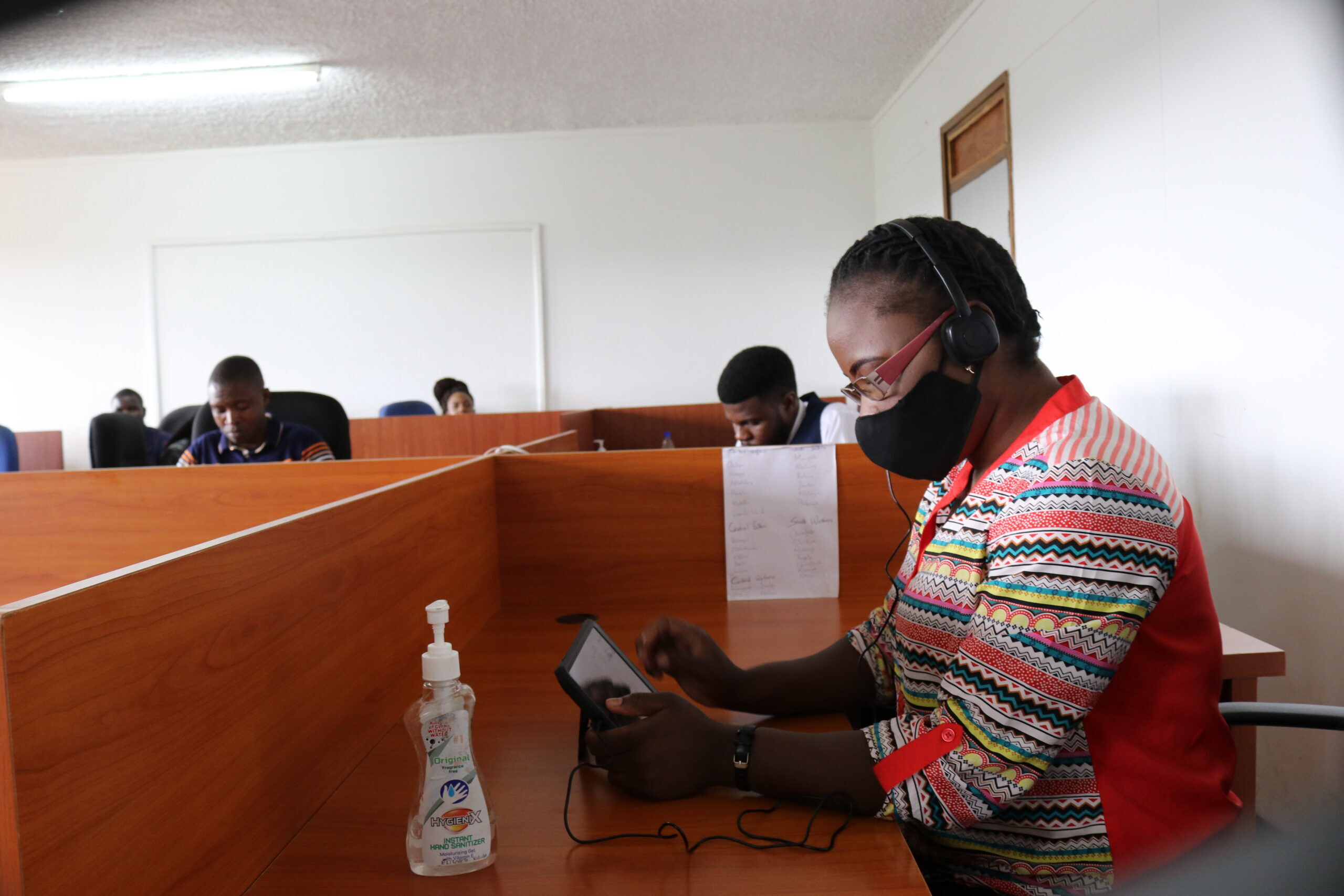
Malawi recommended COVID-19 vaccines for adults aged ≥18 years in March 2021. We assessed factors associated with receiving COVID-19 vaccines in Malawi as part of a telephone-based syndromic surveillance survey. We conducted telephone-based syndromic surveillance surveys with questions on COVID-19 vaccine receipt among adults (≥18 years old) upon verbal consent from July 2021 to April 2022. We used random digit dialing to select mobile phone numbers and employed electronic data collection forms on secure tablets. Survey questions included whether the respondent had received at least one dose of a COVID-19 vaccine. We used multivariable analysis to identify factors associated with COVID-19 vaccine receipt. Of the 51,577 participants enrolled; 65.7% were male. Males were less likely to receive the COVID-19 vaccine than females (AOR 0.83, 95% CI 0.80–0.86). Compared to those aged 18–24 years, older age had increased odds of vaccine receipt: 25–34 years (AOR 1.32, 95% CI 1.24–1.40), 35–44 years (AOR 2.00, 95% CI 1.88–2.13), 45–54 years (AOR 3.02, 95% CI 2.82–3.24), 55–64 years (AOR 3.24, 95% CI 2.93–3.57) and 65 years+ (AOR 3.98, 95% CI 3.52–4.49). Respondents without formal education were less likely to receive vaccination compared to those with primary (AOR 1.30, 95% CI 1.14–1.48), secondary (AOR 1.76, 95% CI 1.55–2.01), and tertiary (AOR 3.37, 95% CI 2.95–3.86) education. Respondents who thought COVID-19 vaccines were unsafe were less likely to receive vaccination than those who thought it was very safe (AOR 0.26, 95% CI 0.25–0.28). Residents of the Central and Southern regions had reduced odds of vaccine receipt compared to those in the North (AORs 0.79, (95% CI 0.74–0.84) and 0.55, (95% CI 0.52–0.58) respectively). Radio (72.6%), health facilities (52.1%), and social media (16.0%) were the more common self-reported sources of COVID-19 vaccine information. COVID-19 vaccine receipt is associated with gender, age, education, and residence. It is important to consider these factors when implementing COVID-19 vaccination programs.