Viral suppression (VS) in children has remained suboptimal compared to that in adults. We evaluated the impact of transitioning children weighing < 20 kg to a pediatric formulation of dolutegravir (pDTG) on VS in Malawi. We analyzed routine retrospective program data from electronic medical record systems pooled across 169 healthcare facilities in Malawi supported by the Elizabeth Glaser Pediatric AIDS Foundation (EGPAF). We included children who weighed < 20 kg and received antiretroviral therapy (ART) between July 2021–June 2022. Using descriptive statistics, we summarized demographic and clinical characteristics, ART regimens, ART adherence, and VS. We used logistic regression to identify factors associated with post-transition VS. A total of 2468 Children Living with HIV (CLHIV) were included, 55.3% of whom were < 60 months old. Most (83.8%) had initiated on non-DTG-based ART; 71.0% of these had a viral load (VL) test result before transitioning to pDTG, and 62.5% had VS. Nearly all (99.9%) CLHIV transitioned to pDTG-based regimens. Six months after the transition, 52.7% had good ART adherence, and 38.6% had routine VL testing results; 81.7% achieved VS. Post-transition VS was associated with good adherence and pre-transition VS: adjusted odds ratios of 2.79 (95% CI 1.65–4.71), p < 0.001 and 5.32 (95% CI 3.23–9.48), p < 0.001, respectively. After transitioning to pDTG, VS was achieved in most children tested within the first 6 months. However, adherence remained suboptimal post-transition and VL testing at 6 months was limited. Interventions to improve VL testing and enhance ART adherence are still needed in CLHIV on pDTG-based regimens.

Explore Related Resources
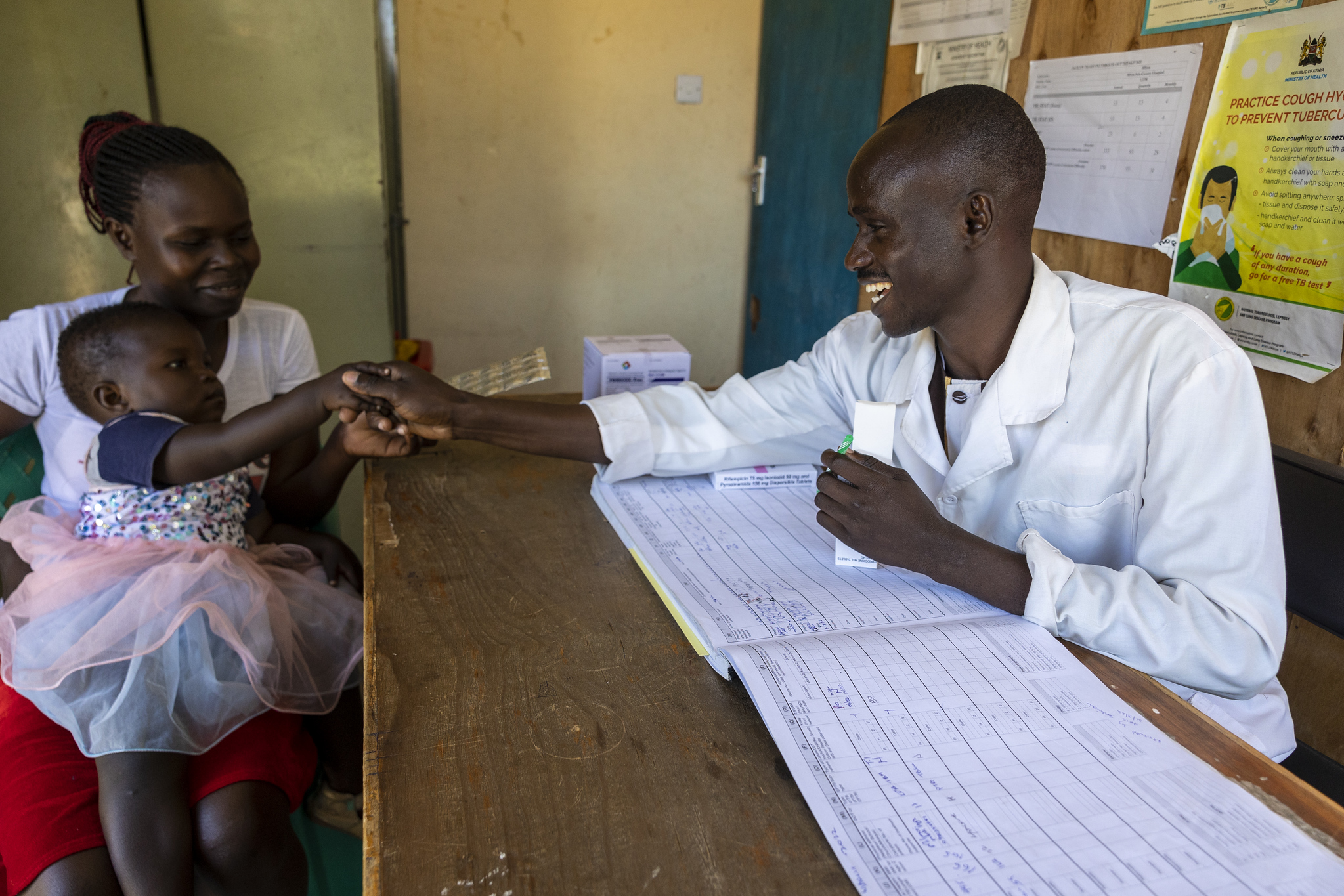
Child,Precious Ogweno accompanied by caregiver Leah Ogweno, at the TB clinic -HEI in Mbita sub county hospital, Mbita, Homabay. Photo by Kevin Ouma for EGPAF.
Journal Articles
Tuberculosis Preventive Treatment Uptake Among Patients Initiating Antiretroviral Therapy in Malawi: Children Left Behind
Published November 2025
Background: Tuberculosis preventive treatment (TPT) is recommended for people living with HIV (PLHIV) to reduce the tuberculosis (TB) incidence in regions with a high prevalence of TB. We evaluated the uptake and completion of TPT among newly initiated antiretroviral therapy (ART) patients in a programme setting in Malawi. Objectives: To describe TPT initiation and completion rates, and […]
View Resource
Topics:
Pediatric Tuberculosis (TB),
Tuberculosis (TB)
Countries:
Malawi
Resource
Barriers and facilitators to implementing six monthly multi-month dispensing of antiretroviral therapy in two urban HIV clinics during the COVID-19 Era in Malawi
Published January 2025
Overview Following the COVID-19 pandemic, the Malawi Government released a policy that promoted the scale-up of six-monthly multi-month dispensing (6-MMD) of antiretroviral therapy (ART) to people living with HIV in order to decrease congestion at health facilities and transmission of COVID-19. We evaluated the barriers and facilitators to implementing the scale-up of 6-MMD.We conducted a […]
View Resource
Countries:
Malawi
February 2022, HEALTH CENTER OF MACIA, Locality Macia, District of Xai Xai, Gaza Province, Mozambique. Delivering a ARVs Bottle in a private pharmacy.
Journal Articles
HIV Drug Resistance Profile in Clients Experiencing Treatment Failure After the Transition to a Dolutegravir-Based First-Line Antiretroviral Treatment Regimen in Mozambique
Published January 2025
Real-world data on HIV drug resistance (HIVDR) after transitioning to tenofovir disoproxil fumarate/lamivudine/dolutegravir (TLD) are limited. We assessed HIVDR rates and patterns in clients with virological failure (VF) after switching from an NNRTI-based regimen to TLD. A cross-sectional study was conducted in Gaza, Mozambique (August 2021–February 2022), including adults on first-line ART for ≥12 months […]
View Resource
Topics:
HIV
Countries:
Mozambique