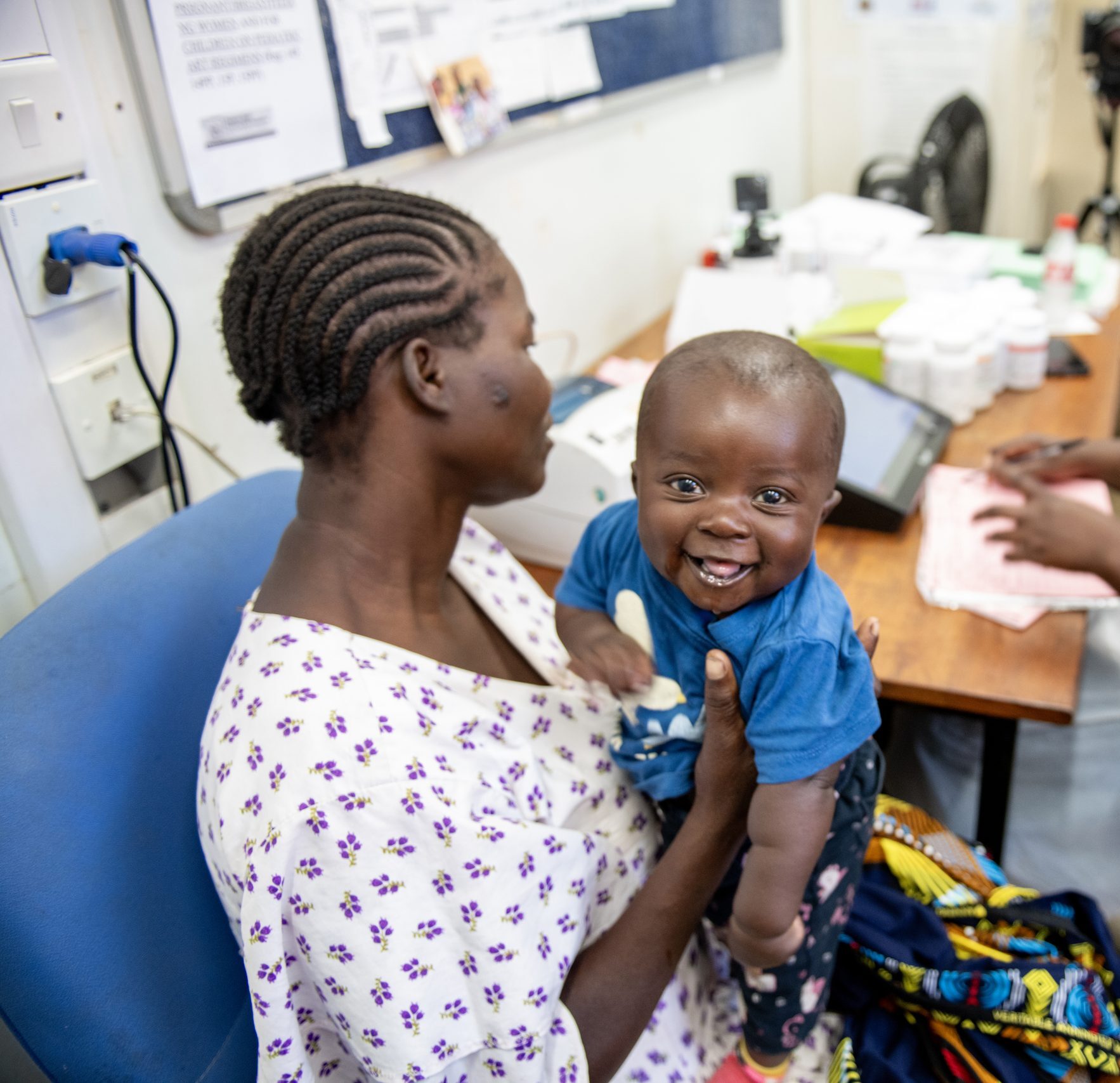
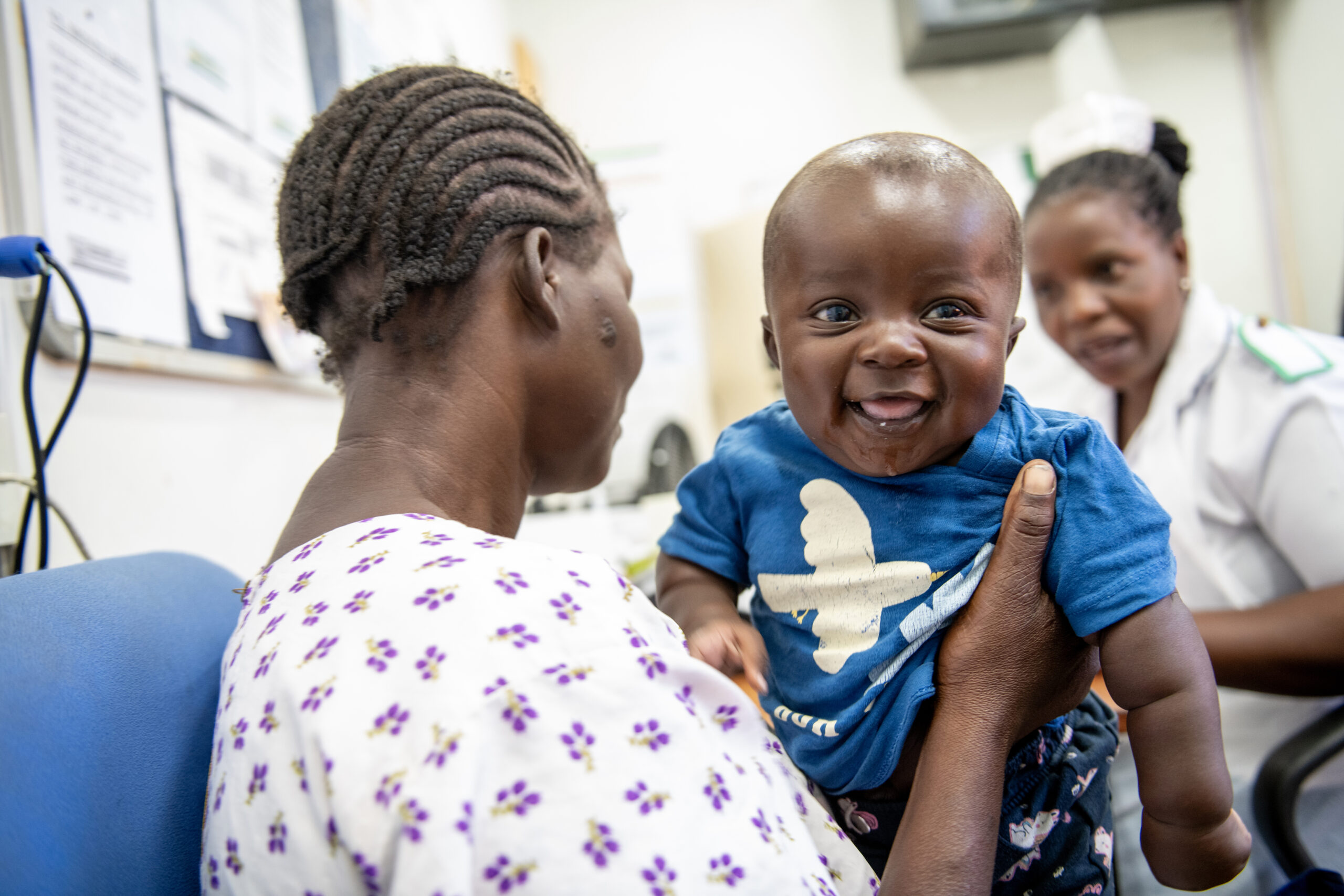
Squalls of fussy infants bounce off the concrete walls of Thyolo District Hospital in southern Malawi. This is music to the staff of the Mother-Infant Clinic: these babies are alive and healthy, communicating in the manner of all babies.
The waiting room is packed. Several dozen women have come to the hospital from the surrounding farming villages.
I’m chatting with Linkage Nurse Margaret Soka to learn more about how her clinic is helping to raise an HIV-free generation in this beautiful spot on our planet. She has been working with the Elizabeth Glaser Pediatric AIDS Foundation (EGPAF) for seven years, the last four here in Thyolo.
“As a linkage nurse, my main role is to emphasize this mother-infant pair program,” says Nurse Soka. “So we work closely with the Ministry of Health staff so that we see the mothers who are HIV-infected and their HIV-exposed babies together in the clinic.” She tells me that they track these mothers until each child is 2 years old.
“My greatest joy is to have HIV- positive mother being followed up in the program with the baby being discharged [HIV-free], she says.
Graduation Day
Nurse Soka tells me that this is a day of celebration. On this date, two years ago, one mother, Sylvia, gave birth to a daughter, Mary, at this hospital. Today, Mary—now walking on her own and expressing her opinions emphatically—is certified HIV-free.
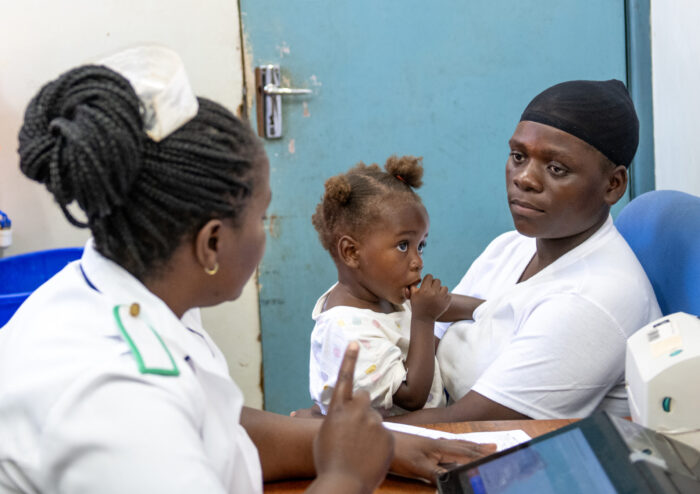
Mary’s journey spans nearly three years, beginning when she was growing inside her mother. Sylvia visited the hospital when she realized that she was pregnant and was attended to by the nurses and counselors in the antenatal care clinic. She was treated with antiretroviral drugs, and her viral load was tested every 6 months to make sure that it was low. This not only keeps her healthy but also blocks the transmission of HIV to her child in utero, if taken as prescribed. This process is called prevention of mother-to-child HIV transmission, or PMTCT.
When Mary was born, she was immediately administered a prophylaxis drug, Nevirapine, as a precaution. Nevirapine blocks the replication of HIV cells and is given to infants affected by HIV in case there were any gaps in PMTCT coverage. The staff also collected a blood sample from Mary when she was 6 weeks old—which came back negative for HIV.
This was good news. But Mary needed to be followed by the nursing staff to make sure that HIV was not latent inside her and also that she does not acquire it through her mother’s breastmilk.
Sylvia continued her drug therapy and returned to Thyolo District Hospital for checkups with the trained nurses at the Mother-Infant Clinic. Mary was tested again at 12 months and was counseled to wean her child at 18 months to prepare her for her final test today at 24 months.
Mary passes. She is HIV-free!
“We told the results to the mother,” says Nurse Soka, “And the mother was so excited. And I’m very sure that even the family is very excited, as well as us, the health workers.”
“I feel very proud because it really needs a lot of intervention from the [time of] antenatal [care] to ensure that the mother is adhering well to the antiretroviral treatment.”
Sylvia will continue receiving antiretroviral therapy, and Mary will be discharged from the HIV care clinic but will continue at the under-5 clinic.
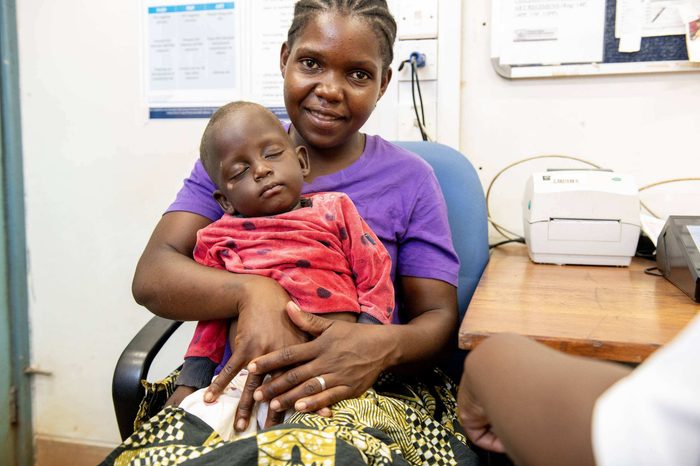
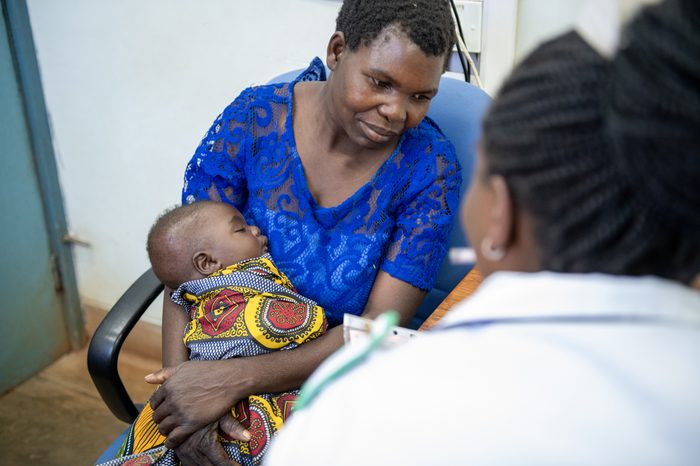
The nurse then tells me that today she met with a mother who has a healthy 3-year-old who went through the program. The mother was also attending the clinic with her 6-week-old child—who has also tested negative for HIV so far.
“Meaning that she’s now having the second baby in the program and that really shows that the program is really a success,” says Nurse Soka.
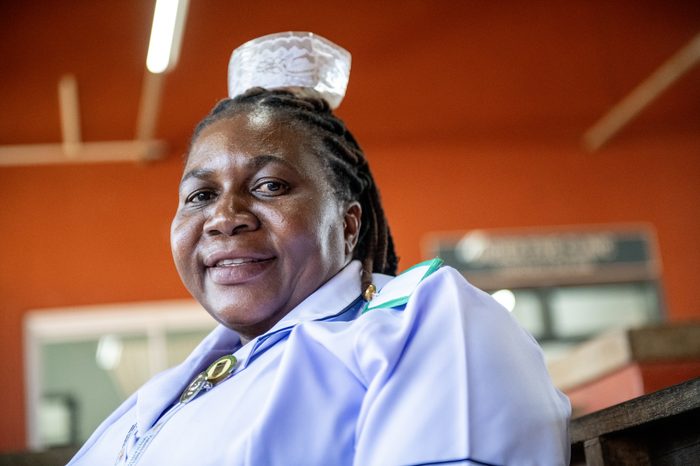
She says that as a mother of three daughters, she feels especially invested: “I’m always in their shoes,” she says. “And being in their shoes, I always ensure proper counseling—with the aim of having HIV-negative babies at the 24 months. So there is continuous mentorship and health education to the mothers.”
Celebrations are frequent occasions at the Mother-Infant Clinic. Nurse Soka says that about 800 children are certified HIV-free each year, so the staff and the mothers get to share frequent moments of joy.
The Turning Point for Infants
Nurse Soka remembers when this was not the case in Malawi.
“We used to have a lot of deaths. There were a lot of infected children because this program wasn’t there,” she says.
She identifies 2011 as the turning point for children in Malawi. That is when the nation pioneered a policy called Option B+, with support of the U.S. President’s Emergency Fund for AIDS Relief (PEPFAR). This became the standard recommended by the World Health Organization.
Option B+ enrolled every pregnant woman into PMTCT, provided prophylaxis for all HIV-affected babies and guaranteed antiretroviral medication for the lifetime of those women. The Mother-Infant Clinic is a further innovation that ensures that those babies are HIV-free.
Closer Than Ever
Nurse Soka says that while this program has been wildly successful, it only works for those mothers who follow the regimen and show up.
“As a linkage nurse, the only challenge I face is when I’ve missed the clients,” she says. “Because even though you give the health education, you always end up having the mothers who have missed the appointments.”
Thyolo is hilly and bisected by rivers. This is a cash-poor community, meaning that many mothers only have their feet for transportation, which might mean walking 20 kilometers to the clinic, crossing rivers, with a baby on her back. “For them to come to Thyolo, they need resources. It’s really a challenge to them.”
She says that EGPAF has developed outreach into the surrounding communities, linking mothers and infants back to care. She tracks every HIV-exposed child born in the hospital.
“Because if you miss one client, if the mother is not even adhering to the clinics, the baby can end up being infected—because no health education is being done,” she says.
For those mothers with cell phones, the clinic can reach out if a mother misses an appointment. In the past, Nurse Soka has depended on volunteer mentor mother (expert clients) who visit women in the community to deliver health education and encourage them to come to the clinic. But funding cuts have frayed those mother-to-mother outreach efforts, and she worries that if funding is not restored, they may see more children grow up with HIV here.
Despite this worry, Nurse Soka says that she and her team are closer than ever to ending pediatric AIDS in their community. She is confident that with continued funding for this clinic and for community outreach, they will get there soon.
“The data shows a positive trend, and we are committed to reaching that target,” says Nurse Soka. “I foresee a future where almost no child is born with HIV in Malawi.”