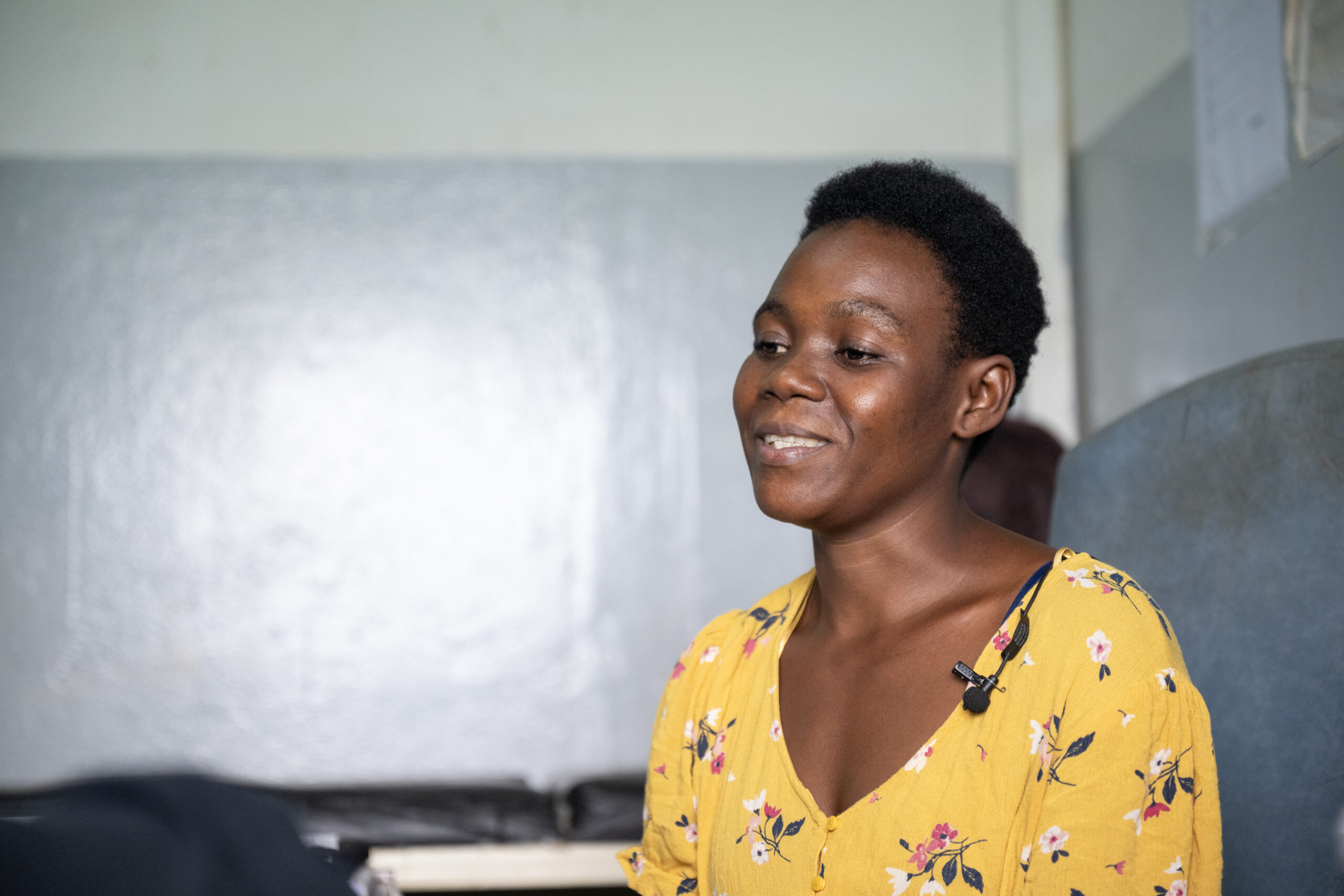
My story starts in 2017 when the hospital was doing an HIV screening campaign.
[The test] came out positive. At that point, I thought everything had come to an end – my life, my plans. And I worried about what would happen to my child.
After the positive diagnosis, I was referred to the Ebolowa Regional Hospital. When I arrived, I was received by three other mothers here. They comforted me and assured me HIV did not need to be challenging, that it was possible to live with. They told me not to give up.
Despite those assurances, inside, I remained traumatized. Life wasn’t the same anymore. I felt like I was different from others. I thought I could no longer live in a society like any other person.
I was not ready to accept my status, but I still picked up the antiretrovirus medication and went back home.
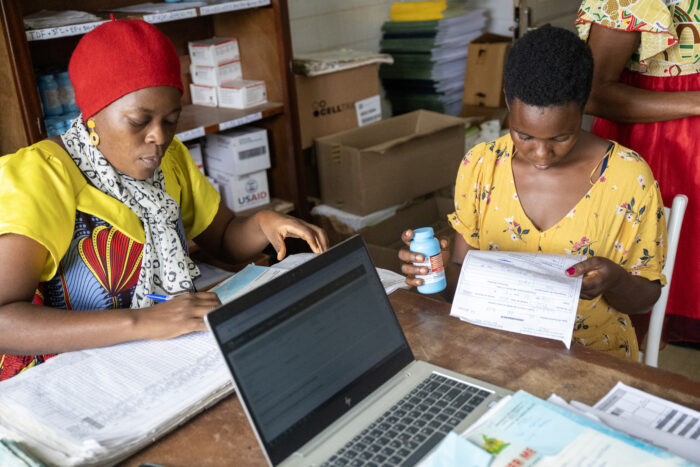
Mentor Mothers led me to acceptance.
I began taking the drugs, but it wasn’t easy. They were difficult to swallow. I almost stopped. But the mentor mothers at the hospital visited me and kept encouraging me to take them.
But I was still depressed. Then one of the mothers took me to a support group in the community. Soon it became my second family. And eventually, I got over the stigma of HIV and began to really listen. I learned that I was not really any different than before. I could work. I could have HIV-negative children. It was after months upon months in the support group that I finally accepted my status, that I could walk like anybody.
I had faith—but I wanted proof.
I would not fully believe until I had a child that was HIV-free. My faith was put to the test when I became pregnant in 2019. I followed all of the protocols to prevent mother-to-child HIV transmission. I made sure that my viral load was suppressed, meaning that I could not pass it to my child.
I gave birth to a baby girl in this same hospital. I dutifully took her to every postnatal exam, where the nurses monitored her health and tested her for HIV. At the end of two years, my child declared to be negative
I proved that a mother with HIV can have an HIV-free baby.
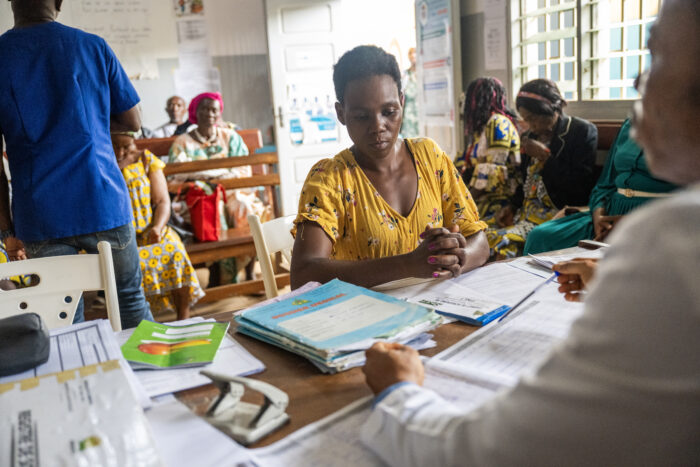
This was a victory. My victory.
And I wanted to share it with other people. So I continued to go to support groups to encourage other women who are newly HIV infected to know they could live with HIV and that they can have HIV-free children.
Success after success: Then I had another girl, who is also HIV-free.
So now I have a 10-year-old boy, a 6-year-old daughter, and a 2-year-old daughter. All are HIV-free.
As a mother, I feel like a winner because I’ve been able to give birth to children who are HIV-negative. I’ve been able to save my children from this stigma or from the negative attitude that they could have from growing up with HIV.
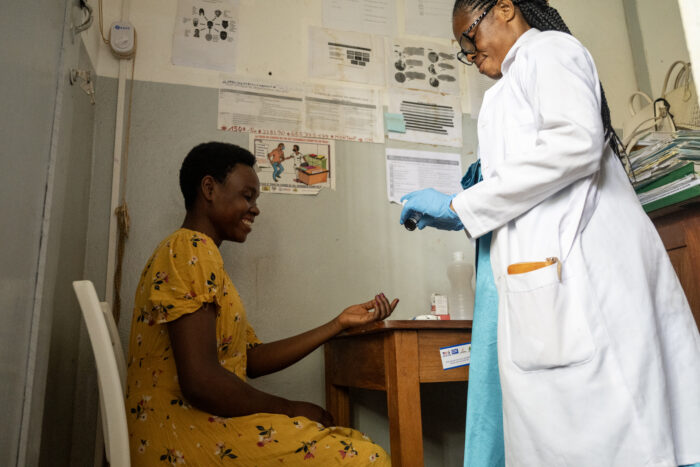
People need to keep talking about HIV.
It’s true that some members of my family have rejected me because I am living with HIV, but I believe that with time and information they will come around. People need to keep talking about HIV.
This is still a struggle because of the stigma, but I continue to grow. I know that with my good health, I will overcome the stigma.
I am so grateful for this hospital, which supported me every step of the way. And until I depart of this earth, I will continually follow up with this hospital.
In Cameroon, the HIV rate has reduced substantially because of persistent HIV programs and public education. The national rate among women, 15-49 is 3.3 percent (down from 11 percent in 2000).
But in rural communities like Ebolowa in the South Region, the rate is higher, with as many as 7 percent of pregnant women testing positive for HIV. The mentor mother program is helping women in those communities seek and accept HIV services and receive the support and education necessary to avoid passing the virus to their children, Cameroon’s next generation.