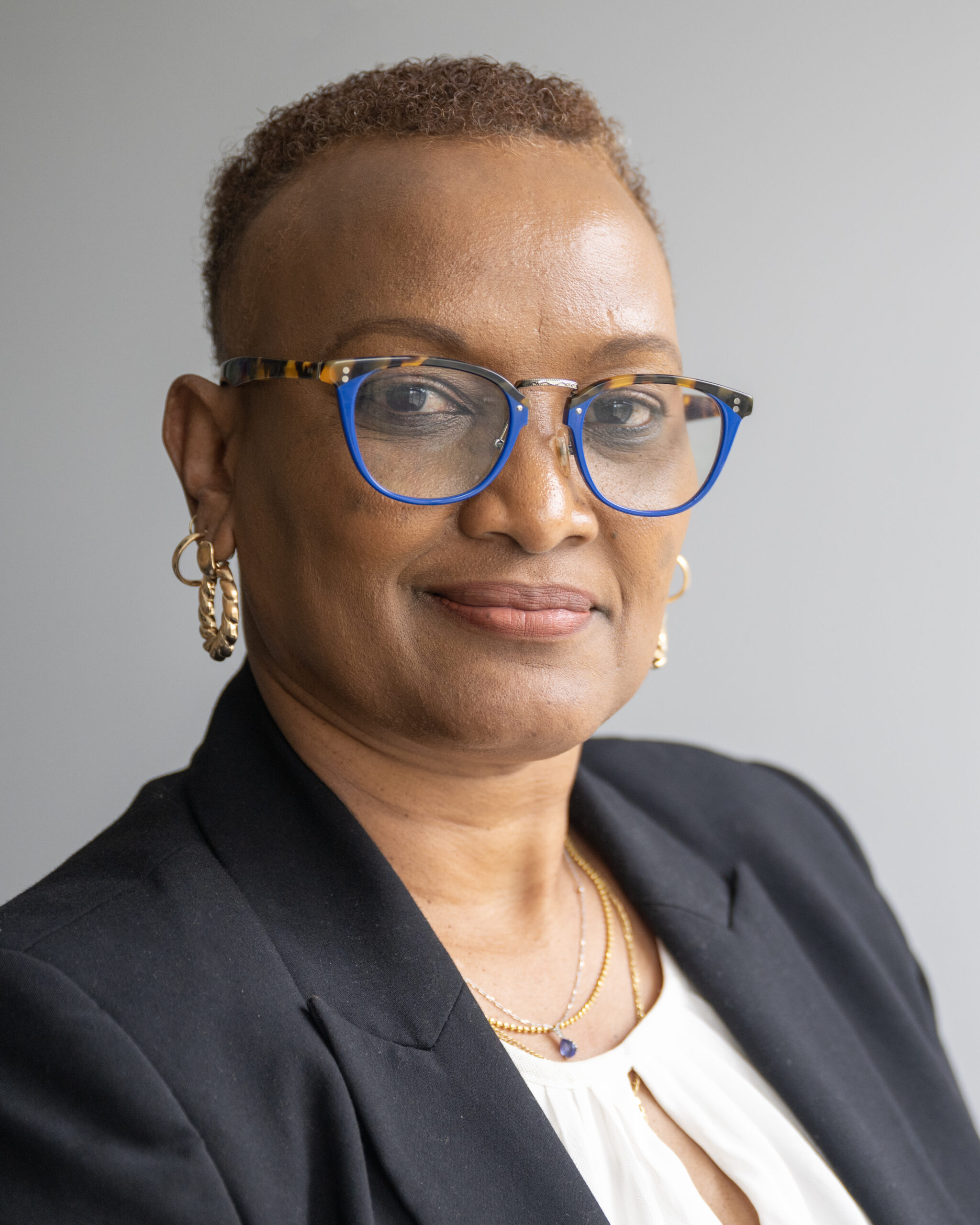
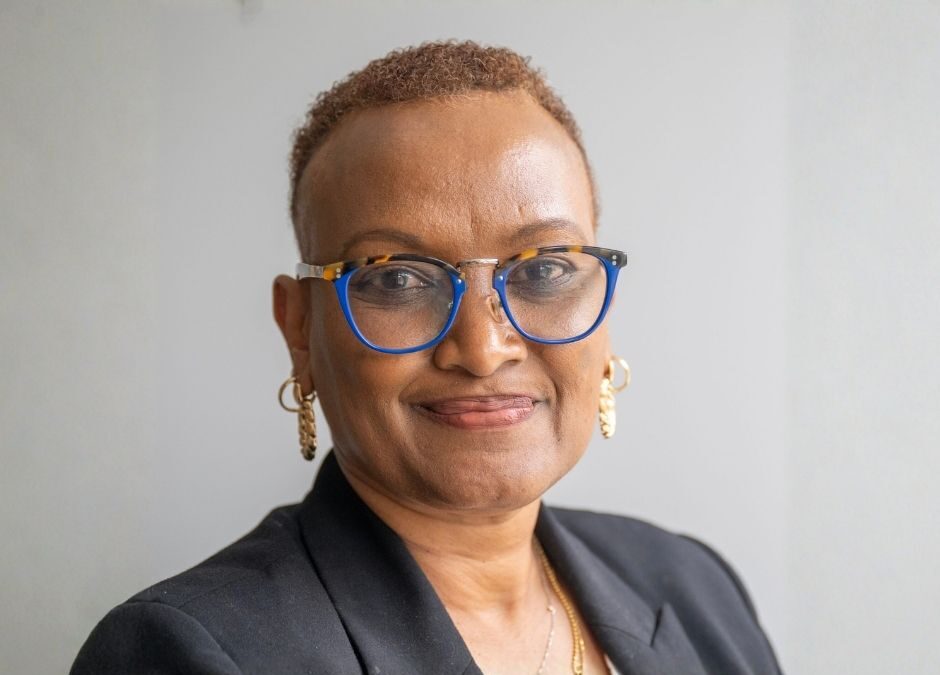
Taking the helm during a pivotal moment, EGPAF President Dr. Doris Macharia discusses global HIV progress, funding challenges, and EGPAF’s path forward.
Dr. Doris Macharia started her role as president of the Elizabeth Glaser Pediatric AIDS Foundation (EGPAF) in February 2025 – one of the most challenging moments in EGPAF’s history. Despite the challenges, she has fearlessly led the organization by staying laser-focused on EGPAF’s mission of ending pediatric HIV.
As the first African physician to lead EGPAF, she has brought deep technical expertise honed from caring for patients, building health care systems, and developing innovative partnerships.
How did you start your career? Have you always focused on fighting for HIV?
I did not plan to make HIV the focus of my medical career. But, as a young internal medicine resident, starting out in the late 1990s, it was inescapable. HIV was ravaging Kenya, where I am from, and many other countries across the African continent.
The epidemic filled hospital wards; every other patient was presenting with an opportunistic infection resulting from the disease. Mothers and babies died every day. There was almost no access to antiretroviral treatment.
Working in Kibera, one of Nairobi’s largest informal settlements, my colleagues and I were clinging to hope that global action might catch up with the suffering we saw all around us.
When did you start to see the tide change in the fight against HIV?
In 2003, that hope became reality. With the launch of the U.S.’s President’s Emergency Fund for AIDS Relief (PEPFAR), treatment and prevention tools began reaching those who needed them most. As a result of initiatives like PEPFAR, new infections among children have dropped nearly 80% over the past two decades.
Today, countries like Botswana — where, at the peak of its epidemic, one in eight infants were infected at birth — have proved that mother-to-child transmission can be driven down to fewer than 100 cases a year.
From the clinics of rural Kenya to country programs across Africa, I have watched despair give way to hope as treatment became widely available. I have seen people at highest risk for infection empowered with prevention tools like PrEP (pre-exposure prophylaxis) and, more recently, long acting injectables that can be administered just twice a year.
These will be game-changing innovations if we can mobilize the resources and political will to deliver them at scale.
How have funding changes impacted the global HIV response?
Yet, just as we are in the last mile of this fight, global funding is faltering. UNAIDS has reported a 3% decline in resources for HIV in low- and middle-income countries over the past year, the steepest retreat in a decade. Donors are shifting attention to other global crises, while political headwinds in the U.S. and elsewhere threaten to further erode support.
Every dollar lost risks babies being born with HIV, young women denied prevention options, and communities losing momentum that took decades to build.
What is EGPAF doing to respond to these changes in the global aid environment?
At the Elizabeth Glaser Pediatric AIDS Foundation (EGPAF), we see this moment as a call to sharpen our focus.
Ending pediatric AIDS and eliminating mother-to-child transmission is entirely achievable within the next few years, but only by doubling down now. That means prioritizing what EGPAF does best: driving evidence-based solutions in the hardest-hit communities, and ensuring that no child, mother, or family is left behind.
How does Elizabeth Glaser continue to inspire you and the Foundation’s work?
Elizabeth Glaser, our founder, did not live to see how far we have come. But her insistence that children and families deserve access to life-saving care remains our compass.
For me, this is a full circle moment. I started my career at the beginning of the epidemic; I now have the chance to see it come to an end. The goal is within reach and we are committed to crossing the finish line.